


Pre-Purchase Inspection Checklist: What to Check Before Buying a Used GMC
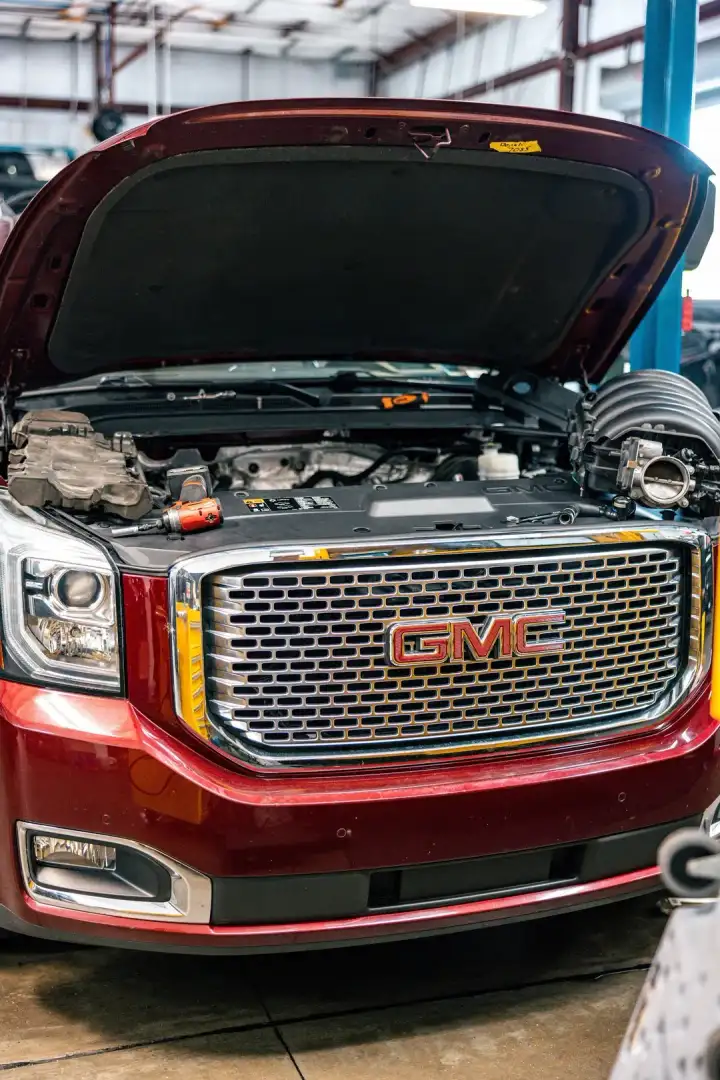
A pre-purchase inspection is one of the most straightforward ways to protect yourself when buying a used vehicle. For $150 to $250, a thorough PPI by a qualified technician can surface mechanical, structural, or electrical issues that would cost far more to repair after the purchase. On a used GMC truck or SUV in Florida, where salt air exposure, flood risk from hurricane activity, and high-use towing history are all realistic factors, a PPI is not optional, it is the cost of buying with confidence.
This checklist covers what to check before you even schedule a PPI, the specific exterior and interior items to inspect yourself, what to listen and look for during the test drive, model-specific red flags on common used GMC vehicles, and how a Starling GMC Titusville certified inspection compares to a third-party PPI.
Why a Pre-Purchase Inspection (PPI) Pays for Itself
The math on a PPI is simple. A typical pre-purchase inspection costs $150 to $250 at an independent shop or a certified dealership service department. A single deferred maintenance item on a full-size truck, a water pump, a set of brakes, a transmission service, routinely costs more than the inspection itself, and a structural or powertrain problem costs several times more. Even on a clean vehicle, the inspection gives you documented evidence of the vehicle’s condition at the time of purchase, which is valuable if a dispute arises later.
Florida adds specific risk factors that make a PPI more important here than in other markets. Salt air from coastal exposure accelerates undercarriage corrosion and electrical connector degradation. Flood title vehicles from hurricane activity enter the Florida used car market after major weather events, and cosmetically cleaned flood cars can pass a casual visual inspection while hiding significant water damage in the HVAC system, electronics, and structural members. The Space Coast and Brevard County’s proximity to saltwater environments makes undercarriage condition particularly important on any used GMC with a coastal ownership history.
A PPI by a factory-trained GMC technician is especially valuable because the technician knows exactly what to look for on specific platforms and model years. The GMC-specific failure modes on the 5.3L V8 AFM lifter, the 10-speed transmission’s early complaint history, and the transfer case behavior on four-wheel-drive trucks are things a knowledgeable GM technician assesses quickly where a general shop might miss the nuance.
What to Check Before You Even Schedule the PPI
Before you invest time and money in an inspection, complete these pre-inspection steps that either confirm the vehicle is worth pursuing or reveal disqualifying issues immediately:
Run a VIN check on Carfax or AutoCheck. Look for accident history, flood title notation, salvage history, and title transfers across multiple states, which can indicate title washing where a flood or salvage vehicle is re-registered in a state with less rigorous title branding. A Carfax flood alert or salvage title ends the evaluation here. A clean Carfax is not a guarantee, but a flagged one is a clear stop sign.
Pull a free NHTSA recall check at nhtsa.gov/recalls. Enter the VIN and see which safety recalls are open and unresolved on the specific vehicle. An unrepaired recall is a repair the seller should complete before you buy, or a negotiating point for a price reduction to cover the repair after purchase.
Ask the seller for complete service records. A vehicle with documented, consistent service history creates a paper trail that makes it very difficult for a major event like a flood, a rebuild, or a significant accident to be hidden. A vehicle with no service records or a gap in the records around a major weather event is a vehicle to scrutinize more carefully.
Walk away before scheduling the PPI if any of these red flags appear: the seller cannot produce the title for inspection, the title is from an out-of-state jurisdiction with different branding standards, the VIN on the dashboard does not match the VIN on the title exactly, or the seller is unwilling to allow an independent inspection.
Exterior Inspection: Body, Paint, Frame, and Underbody
Panel gaps that are uneven across the body are one of the most reliable indicators of significant prior accident repair. Run your eye along the gap between the front fender and the hood, between the door and the B-pillar, and between the rear quarter panel and the trunk or tailgate. These gaps should be consistent and even. If one side is visibly wider or narrower than the other, or if a door has a different gap profile than its partner, structural repair is likely.
Overspray on rubber trim, glass edges, or door jambs indicates a paint repair. Factory paint is applied before assembly, so paint inside door jambs that does not match the exterior panel is a sign of post-accident respray rather than factory application. Look inside the door jambs at the hinge area specifically, as this is difficult to respray to factory appearance.
Undercarriage condition is a critical inspection point on any Florida used vehicle. Ask the seller if the vehicle can be raised on a lift, or schedule the PPI at a shop where a lift is available. Look for rust on the frame rails, crossmembers, brake lines, fuel lines, and control arms. Surface rust on the brake rotors is normal after a vehicle sits, but rust on frame components indicates ongoing corrosion that will continue degrading the structure over time.
Tire wear patterns tell you about alignment and suspension history. Even wear across the full tread surface is normal. Wear on the outer or inner edges only indicates misalignment. Cupping or scalloping across the tread indicates worn suspension components, typically shock absorbers or struts. Uneven wear between the left and right front tires suggests a suspension problem or a prior impact that altered geometry.
Interior Inspection: Electronics, Seats, and Smells
Test every power feature systematically. All windows up and down, both front seats in every direction, the infotainment touchscreen response and all connected features, the climate control at every setting, every USB port with a device plugged in, the backup camera when the vehicle is in reverse, and every interior light. Electrical failures from water damage or deferred maintenance are often random and intermittent, and a comprehensive electrical walkthrough during the inspection is the fastest way to surface issues before they become post-purchase surprises.
Smell is one of the most reliable indicators of flood exposure. A musty odor that intensifies when the AC or heating system is running indicates mold growth in the HVAC ducting, which is characteristic of a vehicle that experienced water intrusion and was not properly dried. Turn on the climate system and place your face near the vents. A clean vehicle should smell like air, recirculated interior air, or a mild new car smell on recent models.
Lift the carpet and floor mats in both the front and rear seating areas. Look underneath for water staining, rust on the floorpan, or unusually stiff or brittle carpet padding. Aftermarket carpet installed on an older vehicle is a potential concealment technique for flood damage, and stiff or discolored underpadding beneath fresh carpet is a significant red flag.
Check the instrument cluster for warning lights after a cold start with the engine running for several minutes. Most warning lights that indicate real issues will appear after the vehicle reaches operating temperature rather than immediately at startup. A seller who is not willing to allow you to observe a cold start is a seller with something to hide.
Under the Hood and Test Drive: What to Listen For
Open the hood and look at the oil cap. Remove it and look at the underside. Milky brown residue or foam on the oil cap indicates coolant mixing with engine oil, which points to a head gasket or intake manifold leak. This is a significant repair and a negotiating or walk-away point.
Check the coolant color in the overflow reservoir. Green or orange coolant at the correct level is normal depending on which type the vehicle was last serviced with. Brown or rusty coolant indicates lack of maintenance. Empty or very low coolant on a warm engine indicates a leak or consumption issue.
During the test drive, listen for transmission behavior during all gear changes. Smooth, barely perceptible shifts are normal. Harsh engagement, slipping between gears, or a thud when shifting into drive from park are symptoms that warrant a transmission diagnostic. On GMC trucks with the 10-speed automatic, some harshness at low speed is a known characteristic of that transmission, but significant lurching or delayed engagement is worth noting.
Brake pulsation during firm highway braking indicates warped rotors, which is a maintenance item. More concerning is brake fade or a soft pedal feel under sustained braking, which points to brake fluid saturation or pad and rotor wear beyond normal maintenance. Suspension noise over bumps, particularly a clunk from the front end, often indicates worn ball joints or control arm bushings.
Model-Specific Red Flags for GMC Trucks and SUVs
Sierra 1500 with either gasoline V8: listen at a cold start and again after full warm-up for a lifter tick. Active Fuel Management ran on the 5.3L L83 through 2018, and Dynamic Fuel Management replaced it from 2019 on both the 5.3L L84 and the 6.2L L87, which means the concern applies to the 6.2L as well rather than to the 5.3L alone. The switching lifters can collapse, producing a distinctive tick that can progress to camshaft damage. Reported failures cluster most heavily in engines built between September 2020 and March 2021, though complaints span the 2019-and-later range and the earlier AFM engines are not exempt. GM has issued service bulletins but no recall. Ask a GMC technician to evaluate the lifter area with a stethoscope on any Sierra with either V8, and treat a documented lifter repair on the service record as a positive rather than a red flag.
Sierra HD with the Duramax diesel: check the DEF (diesel exhaust fluid) system function and look at service records for any emissions system repairs. The transmission cooler lines on HD trucks are a known maintenance item on higher-mileage units. Check for any sign of transmission fluid seepage in the cooler line fittings at the radiator.
Yukon and Acadia: water pump replacement around 100,000 miles is a common maintenance item on these platforms. Ask about water pump history on any unit near or above that threshold. HVAC blend door actuators, which control temperature zone distribution, are a known failure item on these SUVs and can produce clicking sounds from the dashboard when the climate system is running.
Canyon from the early years of the current generation: check service records for any timing system work and listen for chain rattle at cold startup.
Get a Certified PPI From Starling GMC Titusville
Our service department at Starling GMC Titusville offers pre-purchase inspections on any used GMC, including vehicles you are considering buying from a private seller, another dealership, or an online listing. You do not need to purchase the vehicle from us to use our inspection service.
A certified PPI from our team uses the same diagnostic tools and inspection protocol that we apply to our own certified pre-owned inventory. Our technicians know the specific failure modes on every current GMC platform, and the inspection results are documented in writing, giving you a clear record of the vehicle’s condition at the time of purchase.
If you are browsing our own used inventory, our certified pre-owned vehicles have already been through a comprehensive GMC inspection and meet the CPO program’s standards for title history and mechanical condition. We also maintain used Sierra, Canyon, Yukon, and Acadia inventory that has been through our multi-point inspection process.
Our team serves buyers throughout Brevard County, Titusville, Cocoa, Rockledge, Merritt Island, and the surrounding Space Coast region. Schedule a PPI online or call our service department.
Conclusion
A pre-purchase inspection on a used GMC is a $150 to $250 investment that can surface $1,000 to $5,000 in hidden issues, give you documented evidence of the vehicle’s condition, and provide the kind of confidence that a test drive and a visual inspection cannot. In Florida, where flood-title risk, salt air exposure, and the Space Coast’s high-humidity environment are genuine factors, the case for a PPI is stronger than in most markets. Complete the VIN check, title review, and recall lookup before you schedule the inspection. Walk through the exterior, interior, and under-hood items in this checklist during your visit. Listen for the model-specific red flags that distinguish a clean GMC from one that is going to need significant investment after purchase. And if you need a trusted inspection by factory-trained technicians, our service team at Starling GMC Titusville is available for exactly that.
Frequently Asked Questions
How much does a pre-purchase inspection cost at a GMC dealership?
Pricing varies by dealership and by the scope of the inspection, so contact our service department at Starling GMC Titusville for current pricing on a certified pre-purchase inspection. As a general guide to the market, a comprehensive multi-point inspection covering exterior, underbody, interior, electronics, powertrain and fluid condition commonly runs in the $150 to $250 range.
Can I get a pre-purchase inspection on a vehicle from a private seller?
Yes. You can bring any vehicle, from any seller, to our service department for a pre-purchase inspection, and you do not need to buy the vehicle from us to use the service. We document the findings in writing so you have a clear record of the vehicle’s condition before you commit.
What is the AFM and DFM lifter issue on GMC Sierra 1500 trucks?
Both are cylinder deactivation systems that use switching hydraulic lifters, and both have been associated with lifter failures that can progress to camshaft damage if ignored. Active Fuel Management ran on the 5.3L L83 through the 2018 model year. Dynamic Fuel Management replaced it from 2019 on the 5.3L L84 and the 6.2L L87, adding switching hardware on all eight cylinders, so the concern applies to the 6.2L as well as the 5.3L rather than to the 5.3L alone. Reported failures cluster most heavily in engines built between September 2020 and March 2021, though complaints span the 2019-and-later range and the earlier AFM engines are not exempt. GM has issued service bulletins but no recall, and the matter is the subject of ongoing litigation. On any used Sierra with either V8, ask a technician to listen for lifter noise at a cold start and after full warm-up, and treat a documented lifter repair on the service record as a positive rather than a red flag.
Is a Carfax report enough, or do I need a full inspection?
A vehicle history report is a starting point, not complete protection. It relies on data reported to insurers and motor vehicle agencies, which means an accident or flood event that was never reported may not appear. A physical inspection assesses the vehicle’s actual condition, which no data report can do. Use both: run the history report to screen out obvious problems, then inspect any vehicle you are seriously considering.

0 comment(s) so far on Pre-Purchase Inspection Checklist: What to Check Before Buying a Used GMC