




GMC Terrain Review: A Complete Look at GMC’s Compact SUV
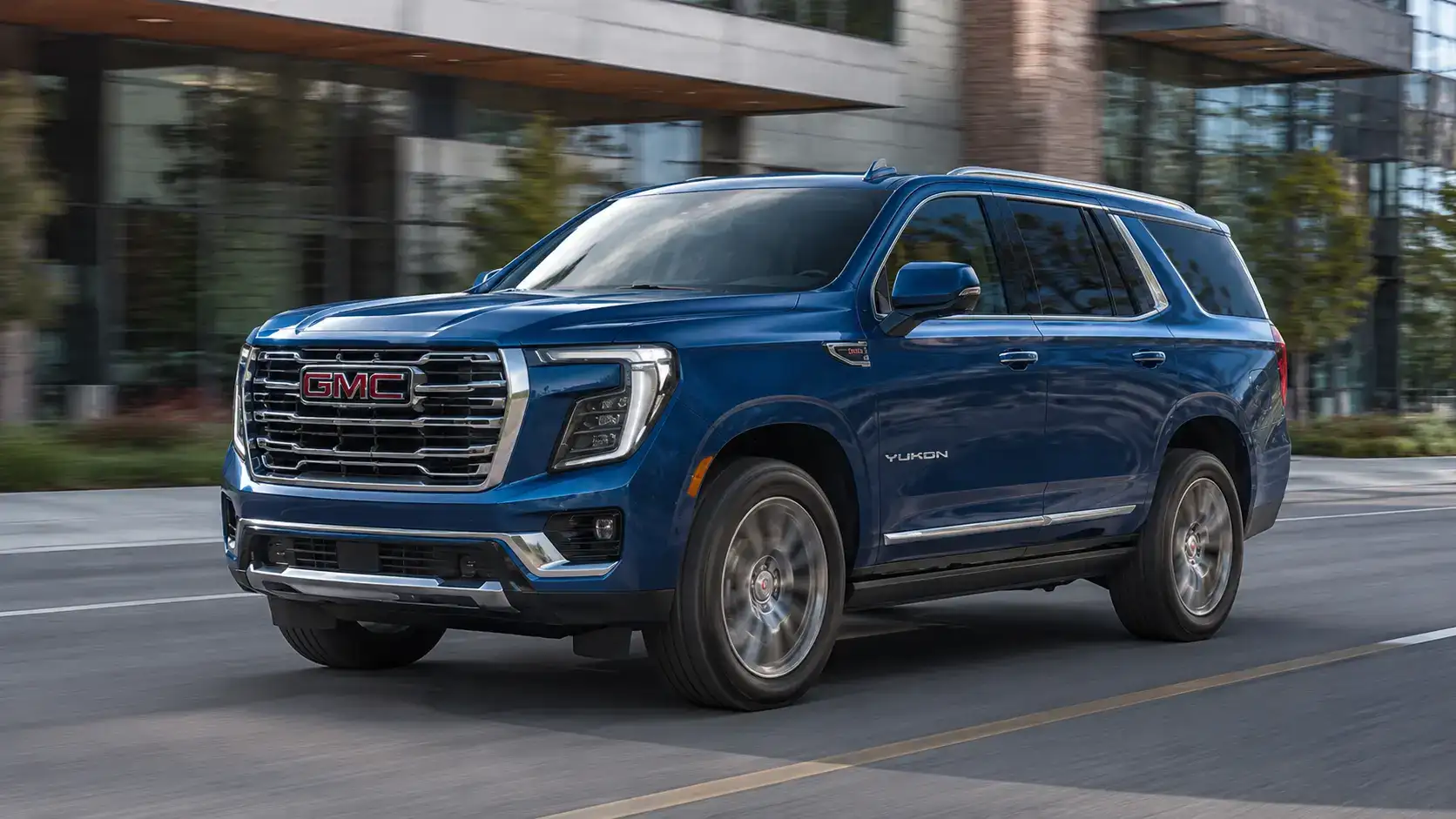
The GMC Terrain enters the 2026 model year one year removed from the most significant redesign in the model’s history, and with two additions that change the conversation around it: the AT4 and Denali trims now join the lineup, and Super Cruise, GMC’s hands-free highway driving system, is available on a Terrain for the first time. What was a competent but anonymous compact SUV two generations ago is now a vehicle with a distinct identity, a genuinely premium interior, and technology that used to require a much more expensive truck.
What the Current-Generation GMC Terrain Gets Right
The redesign moved the Terrain away from the rounded, soft-shaped crossover it used to be toward something with more upright proportions and sharper lines, reading as a smaller sibling to the Yukon rather than a distant cousin. The hood sits higher, the roofline is squarer, and the silhouette communicates capability in a way the outgoing generation simply did not. GMC’s C-shaped lighting signature carries over from the larger trucks, which gives the Terrain a visual family resemblance across the lineup, and available two-tone roof treatments add a customization option the previous model lacked.
The platform expansion matters for real-world use. The current Terrain is larger than its predecessor in nearly every dimension, which translates into a more comfortable rear seat for adult passengers and meaningfully improved cargo capacity. For Florida buyers who use a compact SUV for beach days, theme park weekends and airport runs, that space is felt on every trip.
The trim strategy is also clearer than it used to be. Where earlier Terrain generations stacked complex, overlapping option packages, the current lineup organizes around three distinct personalities: Elevation as the value-focused entry with a monochromatic look, AT4 for light off-road capability, and Denali as the premium tier. Each has its own character rather than simply adding features to a base model, and for 2026 the AT4 and Denali join the Elevation that launched the generation.
Under the Hood: Engine, MPG, and Real-World Performance
Every 2026 Terrain uses the same 1.5-liter turbocharged four-cylinder producing 175 horsepower. What differs is how that engine is geared and how much torque it makes, and this is the detail most buyers miss.
In front-wheel drive, which is standard on the Elevation, the engine pairs with a continuously variable transmission and produces 184 lb-ft of torque. Step up to all-wheel drive, which is optional on the Elevation and standard on the AT4 and Denali, and the transmission changes to an eight-speed automatic while torque rises to 203 lb-ft. That difference also sets the tow rating: 800 pounds with front-wheel drive, and 1,500 pounds with all-wheel drive and the trailering package.
The 175-horsepower figure looks modest next to competitors advertising 200-plus, but the real-world experience is more nuanced. The torque arrives low in the rev range, which means the Terrain feels responsive at the speeds you actually drive: pulling into traffic from a stop, merging onto I-95, or getting past a slow vehicle on US-1. The eight-speed in the all-wheel-drive cars manages power delivery smoothly, without the abrupt downshifts some small turbocharged engines produce. The CVT in the front-wheel-drive Elevation prioritizes efficiency over responsiveness, and the fuel economy numbers show it.
EPA ratings for the front-wheel-drive Elevation come in at 26 MPG city and 28 highway, for 27 combined. All-wheel-drive configurations land lower, with the AT4 rated at 24 city and 26 highway. In real-world Florida driving, where the air conditioning runs continuously from April through October and traffic patterns are unpredictable, expect to land below those figures rather than at them.
The Terrain is not engineered for performance driving and does not pretend to be. It is a comfortable, efficient family SUV that delivers adequate power for every ordinary task and does it quietly. For buyers covering real distance on I-95 or the Beachline Expressway, the highway manners and the efficiency are well matched to the use case.
Terrain Interior, Technology, and Family Comfort
The interior is where the redesign makes its clearest statement. The dashboard centers on a 15-inch diagonal GMC Premium Infotainment System paired with an 11-inch driver information center, a dual-screen layout previously reserved for GMC’s far more expensive trucks. Both are standard on every trim, including the Elevation.
The infotainment system runs Google Built-In, which puts Google Maps, Google Assistant and the Google Play app store directly in the interface without mirroring a phone. Wireless Apple CarPlay and Android Auto are also standard for buyers who prefer their phone’s ecosystem. The screen quality is a real step up from the previous generation in resolution and response time, and the 11-inch driver display is configurable, so you can keep turn-by-turn directions directly in front of you while the center screen handles media or climate.
The rear seat received meaningful attention in the redesign. Legroom improved, and the cushion height and angle were revised for longer-trip comfort. Adults sitting behind adults have enough room for comfortable hour-plus rides, which matters in Florida where distances between destinations are longer than they look on a map. Rear climate vents are standard, which is not a minor detail in a state where the back seat turns into an oven when the front vents are doing all the work.
Available heated and ventilated front seats, a panoramic sunroof and a wireless charging pad bring the Terrain into genuine premium compact SUV territory. The rear seat folds in a 60/40 split, and the practical reality is that the Terrain handles a Costco run, a beach day with gear, or an airport pickup without requiring creative packing.
One feature Florida buyers appreciate more than most: remote start. Pre-cooling the cabin while the Terrain sits in a parking lot before you open the door on an August afternoon is not a luxury here, it is a quality-of-life improvement you use nearly every day for half the year.
Terrain Trim Levels: Elevation, AT4, and Denali Explained
The Elevation is the entry point and the trim that launched the generation. It emphasizes a clean, athletic look through monochromatic styling, with body-colored accents in place of chrome. Front-wheel drive and the CVT are standard, with all-wheel drive and the eight-speed available. Standard equipment includes the 15-inch infotainment system, the 11-inch driver display, heated front seats, a heated steering wheel, remote start and the full GMC Pro Safety suite, which makes it a genuinely well-equipped entry point rather than a stripped-down loss leader. Starting MSRP is approximately $30,200.
The AT4 adds light off-road capability: an off-road-tuned suspension with additional ride height, a steel front skid plate, all-terrain tires, red front recovery hooks, Hill Descent Control and an AT4-exclusive Terrain drive mode for low-speed crawling. All-wheel drive and the eight-speed automatic are standard, which also brings the 1,500-pound tow rating. For Florida buyers, the AT4 earns its premium if you spend time on unpaved roads in state parks, camp around Ocala or Apalachicola, or regularly use unpaved beach access. If your driving is entirely on pavement, the capability may not pay for itself in daily use. Starting MSRP is approximately $39,400.
The Denali is the flagship and it shows: perforated leather-appointed seating, heated and ventilated front seats, heated rear seats, driver’s seat memory, additional sound insulation, HD Surround Vision, larger available wheels and the most complete technology content in the lineup. All-wheel drive is standard. Starting MSRP is approximately $41,900.
The 2026 change worth knowing about: Super Cruise, GMC’s hands-free highway driving system, is now available on the Terrain, on the AT4 and Denali trims. It is an option rather than standard equipment, and it is not offered on the Elevation. For anyone who logs regular miles on I-95 through Brevard County, this is the single most consequential addition to the Terrain lineup, and it is a feature the previous Terrain could not be equipped with at any price.
| Trim | Drivetrain & Transmission | Key Additions | Starting MSRP |
|---|---|---|---|
| Elevation | FWD with CVT standard; AWD with 8-speed available | Monochromatic styling, 15″ infotainment, heated seats and steering wheel, remote start | ~$30,200 |
| AT4 | AWD with 8-speed standard | Skid plate, all-terrain tires, recovery hooks, Hill Descent Control, Terrain drive mode, Super Cruise available | ~$39,400 |
| Denali | AWD with 8-speed standard | Perforated leather, ventilated front and heated rear seats, HD Surround Vision, Super Cruise available | ~$41,900 |
Pricing is approximate starting MSRP and excludes destination, taxes and fees. Confirm current pricing and equipment on the specific vehicle you are considering.
Safety Features and Driver Assistance Standard on the Terrain
The 2026 Terrain ships with GMC Pro Safety as standard equipment across every trim, a suite of more than 18 active safety and driver assistance features. Forward collision alert with automatic emergency braking, lane keep assist with lane departure warning, following distance indicator, IntelliBeam automatic high beams, rear cross-traffic braking and a rear vision camera are all standard regardless of which trim you choose. Pedestrian and bicyclist detection extend the automatic braking capability beyond the straightforward front-end collision scenario.
Moving up the lineup or selecting options adds HD Surround Vision with multiple camera views, which is genuinely useful in tight parking situations, along with adaptive cruise control and rear pedestrian alert. On the AT4 and Denali, Super Cruise is the available step beyond adaptive cruise, handling steering as well as speed on compatible highway segments.
In Florida’s specific driving environment, with heavy pedestrian activity around tourist and resort areas, significant cyclist presence on Space Coast roads and trails, and constant merging on I-95 and the Beachline, the depth of the standard suite is a real differentiator. Several competing compact SUVs still charge for features the Terrain includes.
Terrain vs. the Competition: CR-V, RAV4, and Equinox
The honest competitive picture starts with acknowledging that this segment changed substantially for 2026, and not in the Terrain’s favor on one specific axis.
The Toyota RAV4 was completely redesigned for 2026 and is now hybrid-only across every trim, the first time in the model’s history. The sixth-generation RAV4 pairs a 2.5-liter four-cylinder with Toyota’s fifth-generation hybrid system for 226 horsepower in front-wheel drive and 236 with all-wheel drive, adds a 12.3-inch digital cluster as standard, and includes Toyota Safety Sense 4.0 on every trim. A plug-in hybrid version is also offered. If fuel economy is your first criterion, the RAV4’s efficiency is in a different category from anything the Terrain can offer, and Toyota’s reliability reputation and dealer network remain genuine strengths. Where the Terrain counters is interior execution at the upper trims and the availability of Super Cruise, which the RAV4 has no equivalent to.
The Honda CR-V was refreshed for 2026 and remains the most rational alternative in the segment. The CR-V Hybrid produces 204 horsepower and returns 43 MPG city and 36 highway in front-wheel drive, and Honda added a TrailSport Hybrid variant with all-terrain tires for 2026. Hondas also depreciate more slowly than most American brands, which matters if you buy with resale in mind. The Terrain wins on interior technology, where the 15-inch screen with Google Built-In is a meaningful step up from Honda’s system, and on warranty, where GMC’s 3-year/36,000-mile bumper-to-bumper and 5-year/60,000-mile powertrain coverage beats Honda’s standard terms.
The Chevrolet Equinox is the Terrain’s closest mechanical sibling, riding on the same GM platform with the same basic powertrain, and is typically priced below a comparable Terrain trim. That makes it the rational budget choice if the Terrain’s premium content is not important to you. The Terrain earns its difference through better materials, a more refined interior and GMC’s brand positioning. For buyers who want the premium feel, it is worth the gap; for buyers optimizing purely for lowest cost, the Equinox delivers functionally similar transportation for less.
Is the GMC Terrain the Right Compact SUV for You?
The Terrain fits a specific buyer well, and knowing whether you match that profile is what makes the decision confident rather than agonizing.
It is the right choice if you want a compact SUV that feels genuinely premium without a luxury badge and a luxury price; if your household is a couple downsizing from something larger without wanting to give up interior quality, or a family with small children; if you value modern infotainment, wireless connectivity and a deep standard safety suite over raw performance; and if most of your driving is urban and suburban with regular highway stretches. If those highway stretches are long and frequent, the availability of Super Cruise on the AT4 and Denali moves the Terrain ahead of every import competitor in the segment on that one dimension.
It is probably not the right choice if you need three rows, because the Terrain seats five and no amount of creative packing changes that. It is not a towing vehicle: 800 pounds with front-wheel drive and 1,500 with all-wheel drive handles a small utility trailer or a lightweight boat, not a camper. If you tow regularly, the Canyon or Sierra 1500 is the appropriate platform. And if a hybrid matters to you, whether for fuel savings, environmental reasons or resale, the Terrain does not offer one, which is a real gap against a RAV4 lineup that is now entirely hybrid and a CR-V Hybrid that sells more than half of all CR-Vs.
Conclusion
The 2026 GMC Terrain is a compact SUV that matches the technology and interior quality of its import competitors while delivering a visual identity and premium execution that used to belong to more expensive vehicles. The 175-horsepower turbo four is adequate rather than exciting, the 15-inch infotainment screen with Google Built-In sets a high bar for the segment, and the three-trim structure gives buyers a clear choice without option-sheet overwhelm. The Terrain’s limitations are real and worth naming: no hybrid in a segment where the best-selling competitor has gone hybrid-only, five seats rather than seven, and a tow rating that tops out at 1,500 pounds. But the addition of Super Cruise on the AT4 and Denali answers the one technology gap that mattered most, and for the buyer who wants a premium compact SUV for Florida family life, the Terrain now delivers on everything that matters.
Browse current GMC Terrain inventory at Starling GMC Titusville, 1350 S Washington Ave, or schedule a test drive to see which trim fits how you actually drive.

0 comment(s) so far on GMC Terrain Review: A Complete Look at GMC’s Compact SUV