




GMC Sierra Years to Avoid: A Complete Reliability Guide by Model Year
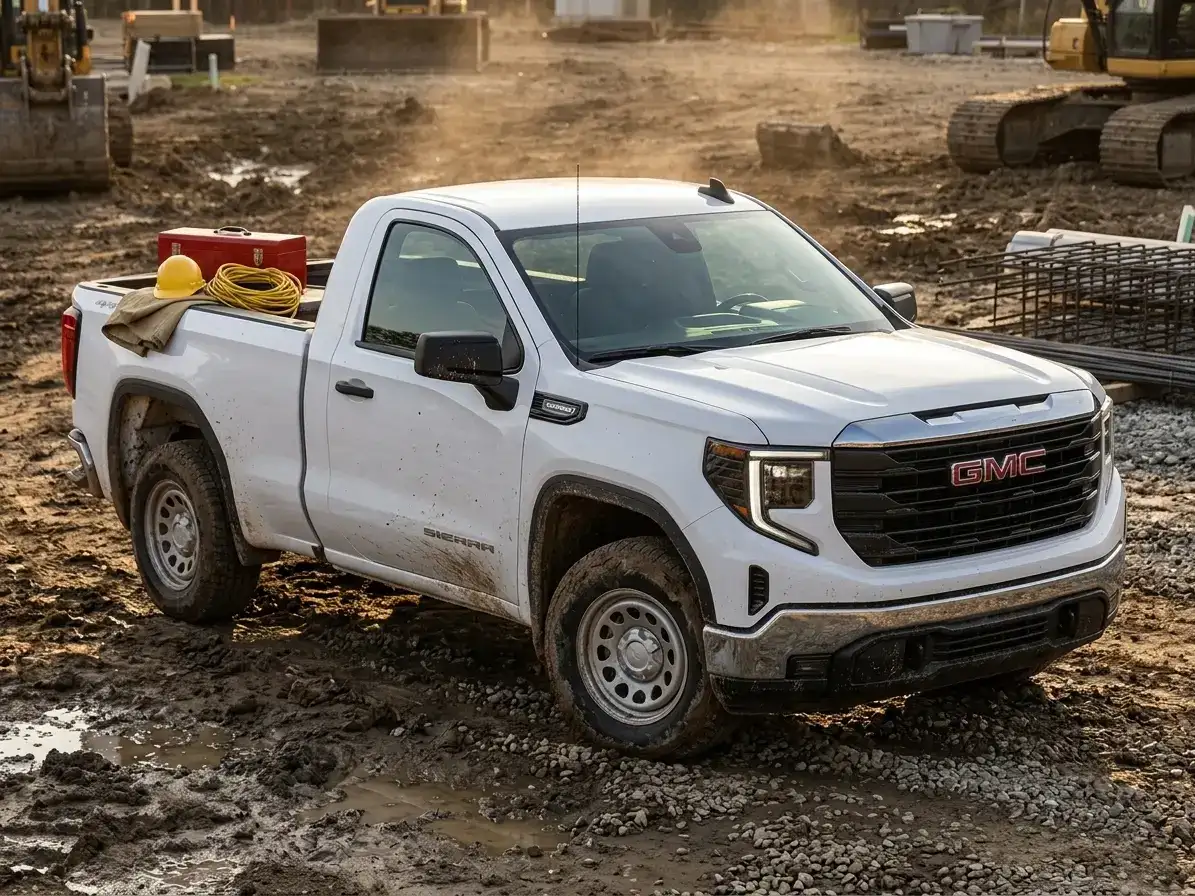
The GMC Sierra 1500 is one of the most popular full-size trucks in North America, and most model years deliver reliable, long-term service. But some years have well-documented problems that show up consistently in NHTSA complaint data, owner reports, and independent reliability analysis, and knowing which years those are before you buy is essential homework for any used Sierra purchase.
This guide covers the Sierra model years with the most significant documented problems, the specific issues that define each era, the years that represent the cleanest buying options in the used market, and model-specific failure modes that require evaluation on any used Sierra regardless of year.
The Short Answer: Which Sierra Model Years to Skip
If you want the summary before the full analysis, these are the Sierra model years that carry the most documented risk in the used market:
- 2007 to 2010: the first generation of Active Fuel Management (AFM) rollout, highest complaint rates for oil consumption and lifter failure in the pre-K2 era, and chrome door handle blistering that was a documented safety concern.
- 2014 to 2015: the K2 platform launch years, which consistently produce the highest complaint volumes of any Sierra era. The first year of the K2 platform (2014) brought AC condenser leaks, 6-speed transmission torque limitations, below-average headlight performance, and infotainment problems. The 2014 and 2015 model years lead reliability complaint rankings by significant margins. The 2016 model year saw meaningful GM corrections and carries a much lower complaint rate, which is why it is covered separately below as a caution year rather than an avoid year.
- 2019: elevated NHTSA complaint rates specifically tied to the new 10-speed automatic transmission in its first year of Sierra application. Not as severe as 2014-2015, but meaningfully higher than surrounding years.
The 2020 through 2024 model years represent a caution tier rather than an avoid tier. NHTSA data and independent analysis flag these years for higher-than-median engine complaint severity, but they are not universally problematic. Service records and a thorough PPI matter more on these years than a blanket avoidance recommendation.
| Model Years | Verdict | The Documented Issue | What to Check |
|---|---|---|---|
| 2007–2010 | Avoid | First-generation AFM oil consumption; chrome door handle delamination on 2007–2008 | Oil consumption history; add a quart test between changes |
| 2013 | Cleanest older buy | Last year of the previous platform, fully documented | Undercarriage corrosion; standard PPI |
| 2014–2015 | Avoid | Highest complaint volumes in Sierra history: AC condenser, infotainment, headlights | AC performance; infotainment response; transmission service records |
| 2015–2019 with the 8-speed | Avoid unless documented | 8L45 / 8L90 class action: slipping, bucking, harsh engagement | Highway drive under light throttle; transmission service and calibration history |
| 2016 (late production) | Good buy | K2 launch issues largely corrected | Build date on the driver door jamb label; which transmission it has |
| 2018 | Strongest buy of the decade | Last K2 year, well-established record | Prefer the 5.3L with the six-speed; a 6.2L carries the eight-speed |
| 2019–2020 | Caution | DFM valve lifter failures begin; ten-speed first-year calibration on 6.2L and Duramax | Lifter tick at full operating temperature; calibration updates applied |
| 2021–2024 with the 6.2L V8 | Open recall | NHTSA 25V-274: connecting rod and crankshaft defects, loss of propulsion. EA26-005 reviewing the remedy | Run the VIN; ask what was performed, not whether the campaign shows closed |
| A truck in a high-risk year can still be a good buy with documented service history. Recall status should be verified by VIN at the time of purchase. | |||
What Makes a Sierra Model Year ‘Bad’: The Three Big Issues
Most of the Sierra’s documented reliability problems trace to three recurring issue categories that have defined different eras of production.
AFM and DFM lifter failure is the most significant. Active Fuel Management, which deactivates four of the eight cylinders on the 5.3L V8 at highway cruise, was replaced by Dynamic Fuel Management, which varies how many cylinders are firing instead of switching between four and eight. The change did not settle the valve lifter question. A documented pattern of valve lifter failures covers the DFM 5.3L L84 and 6.2L L87 engines in 2019-and-later Sierra 1500 trucks, alongside the 2021 full-size SUVs, with service bulletins pointing at valve springs and at bent pushrods that collapse a lifter or break it apart. The failure produces a distinctive tick at idle that can progress to camshaft lobe damage. In practice this means the warm-idle listen applies to a 2021 truck exactly as much as to a 2015 one.
Transmission problems cover two distinct eras, and the engine in the truck tells you which one applies. The 8L45 and 8L90 eight-speed automatics, fitted to Sierras from 2015 through 2019, are the subject of a class action naming thirteen GM models over transmissions that can slip, buck, kick, jerk and harshly engage, attributed to excess torque converter friction caused by internal fluid starvation. Separately, the ten-speed automatic arrived on the 2019 Sierra with the 6.2L V8 and the 3.0L Duramax, and spread to the 5.3L for 2020; its first-year calibration produced harsh low-speed engagement and shudder under light throttle, which GM addressed through software updates. Because the transmission follows the engine and the year, establishing which combination you are looking at comes before any judgement about shift quality.
Electrical system faults have appeared across multiple generations. The 2014 infotainment system was widely criticized for poor response and software crashes. The 2007 and 2012 model years show elevated complaint rates for wiring harness problems and transfer case electrical faults. Electrical issues are harder to evaluate on a used truck than mechanical problems because intermittent faults may not appear during a test drive or even a full inspection cycle.
Years to Avoid: 2007-2010 (First AFM Generation)
The 2007 Sierra introduced Active Fuel Management on the 5.3L V8, and the first-generation implementation was the most problematic. Oil consumption rates on 2007 to 2010 5.3L V8 trucks were significantly higher than GM’s stated specification, and owner complaints about needing to add a quart or more between oil changes were widespread.
The underlying issue was a combination of the AFM system’s pressure cycling on the deactivated cylinders and piston ring design that allowed oil to pass into the combustion chamber at an elevated rate. GM issued technical service bulletins addressing the problem but not a recall, which meant that owners bearing repair costs out of warranty did not have recourse to manufacturer-covered repairs.
Chrome door handle delamination and blistering on 2007 and 2008 trucks was classified as a safety concern because the blistering created sharp edge exposure at a high-contact location. This was addressed with an extended warranty on some units but remained a documented quality issue on this generation.
The 2007 and 2008 model years carry the highest severity-weighted complaint rates in the pre-K2 Sierra era. For used Sierra buyers on a budget, the 2009 and 2010 trucks are meaningfully cleaner than 2007 and 2008, but the AFM oil consumption issue extends across the full 2007 to 2010 range.
Years to Avoid: 2014-2015 (K2 Platform Launch Years)
The K2 platform Sierra 1500 launched in 2014 with significant improvements in fuel economy, payload, and structural rigidity, but the first two years of the platform produced some of the highest complaint volumes in Sierra history.
The 2014 Sierra’s most significant issues were AC condenser failure (the condenser’s placement made it susceptible to road debris penetration), a 6-speed automatic that produced torque converter shudder under light acceleration for transmission complaints that owners reported extensively, and that intensified with the eight-speed automatic introduced for 2015, and headlight performance that owners and reviewers of the period criticised, a complaint that predates the IIHS headlight ratings program, which did not publish its first ratings until 2016.
The 2015 model year carried most of the same issues from the 2014 launch, and together these two years account for the highest complaint counts in the NHTSA database for the K2 generation. If you are evaluating a 2015 Sierra, pay particular attention to transmission behavior on the test drive and ask for documentation of any transmission service history.
The 2016 model year represents meaningful improvement over 2014 and 2015. GM addressed several of the AC condenser and infotainment issues in the 2016 production run, and the complaint rate drops noticeably relative to the first two K2 years. Late 2016 production Sierras are a significantly better purchase than early 2014 or 2015 units.
Caution Years: 2019-2024 (New Platform and Transmission Transitions)
For most of this range, documentation beats model year: service records and a certified inspection tell you more than the year on the title. There is one exception, and it is not a matter of complaint rates.
NHTSA recall 25V-274 covers 2021 through 2024 vehicles built between March 1, 2021 and May 31, 2024 and equipped with the 6.2L V8, including 153,637 GMC Sierra 1500 trucks. The defect is manufacturing variation in the connecting rods and crankshaft, traced to supplier issues with rod-bearing sediment and crankshaft dimensions outside specification. It can damage or destroy the engine and cause a loss of propulsion while driving. Warning signs are knocking or banging noises, the check engine light, hesitation, reduced propulsion or a no-start condition. The remedy is an inspection, with repair or engine replacement where needed; engines that pass receive higher-viscosity oil, a new oil fill cap and an oil filter replacement.
It did not end there. In August 2026 NHTSA opened engineering analysis EA26-005, covering roughly 997,000 model year 2021 through 2026 vehicles with that engine, to examine whether the recall remedy actually works and whether the problem extends to engines built after the original window. If you are shopping a 2021-or-newer Sierra with the 6.2L V8, run the VIN before anything else, and ask specifically what was done under the recall rather than whether it was “completed.”
The 2019 and 2020 model years sit outside that recall. The 2019 is worth a closer look for a different reason, covered below, and on both years the questions that matter are which engine the truck has, whether transmission calibration updates were applied, and whether lifter noise was ever reported.
Best Years to Consider for a Used Sierra
The cleanest used Sierra options by model year are:
2009 and 2013: both show lower complaint rates relative to surrounding years. The 2009 avoids the worst chrome handle and AFM issues of 2007 and 2008. The 2013 represents the last year of the previous platform before the K2 transition, with a well-understood reliability profile.
2016 (late production) and 2018: the 2016 Sierra in late production benefited from K2 platform corrections that addressed the AC condenser, infotainment, and transmission complaints of 2014 and 2015. The 2018 Sierra is the last year before the T1 platform transition and carries a well-established reliability record with the 6-speed automatic that had been refined across several production years.
For buyers considering any of these years, the inspection priorities remain consistent: evaluate the 5.3L V8 for AFM lifter noise after the engine is fully warmed up, check transmission shift quality on a highway drive, and inspect the undercarriage for corrosion consistent with the vehicle’s service geography. Getting a pre-purchase inspection by a GMC-certified technician before committing is the single best step you can take to avoid inheriting a prior owner’s deferred maintenance.
It is also worth noting that the difference between a clean 2014 unit and a problem 2014 unit can be significant, since not every truck in a high-risk model year will have developed the failure mode. Service history showing proactive AFM maintenance, transmission fluid changes, and consistent dealer-level diagnostics on a 2014 or 2015 Sierra can make a specific unit worth considering even in a year where the general recommendation is caution.
Shop Inspected Used Sierras at Starling GMC Titusville
Every used Sierra on our lot at Starling GMC Titusville goes through a multi-point inspection performed by factory-trained GMC technicians who know exactly what to evaluate on each platform and model year. We are transparent about which model years present more risk and which represent the strongest value in the current used market, and our team can walk you through the specific inspection results for any used Sierra you are considering.
Our certified pre-owned inventory meets GM’s CPO program standards for title history, mechanical condition, and documentation. We also maintain non-CPO used Sierra inventory that has been through our internal inspection process. Browse our current used Sierra inventory online or visit our lot in Titusville. We serve buyers from throughout Brevard County, Titusville, Cocoa, Merritt Island, Rockledge, and the surrounding Space Coast area.
Because the 6.2L V8 recall is still under federal review, we run the VIN of every used Sierra we take in against open recalls and tell you exactly what was performed, not just whether the campaign shows as closed.
Conclusion
Most GMC Sierra model years deliver long-term, reliable service with proper maintenance. The years worth avoiding, specifically 2007 to 2010 for first-generation AFM oil consumption and 2014 to 2015 for K2 platform launch problems, carry enough documented risk that buyers should either avoid them entirely or accept a significantly lower price point that accounts for the repair probability. The 2016 late-production, 2018, and 2013 Sierras represent the strongest used buying options in the prior decade of production. For 2019 and newer, service records and a certified inspection matter more than model year alone. Whatever year you are evaluating, a pre-purchase inspection by a GMC-trained technician is the most valuable step you can take before signing.
Frequently Asked Questions
What is the best year GMC Sierra 1500 to buy used?
The 2018 Sierra 1500 and late-production 2016 Sierra 1500 represent the strongest used buying options in the prior decade. The 2018 is the last year of the well-established 6-speed automatic on the K2 platform, and the late-2016 production reflects GM’s corrections to the most significant K2 launch issues from 2014 and 2015. The 2013 model year is also a solid option as the last year of the previous generation with a well-understood reliability profile.
What years did the GMC Sierra have AFM lifter problems?
Active Fuel Management lifter failure is most documented on the 5.3L V8 Sierra 1500 from approximately 2007 through 2019. The worst years for this failure are 2014 through 2016. The issue is worth evaluating specifically on any 5.3L V8 Sierra in this range by listening for lifter tick at idle after the engine has fully warmed up. A GMC-certified technician can assess the severity with a stethoscope at the lifter area.
Is the 2019 GMC Sierra a good used buy?
The 2019 Sierra 1500 carries elevated transmission complaint rates from the 10-speed automatic’s first year of Sierra application. If the specific unit you are evaluating has received GM’s calibration updates for the 10-speed, the shift quality issues are significantly reduced. Ask the selling dealer or the service history whether calibration updates have been applied. A thorough PPI is especially important on 2019 units.
How many miles does a GMC Sierra typically last?
A well-maintained Sierra 1500 regularly reaches 200,000 to 300,000 miles, and the 5.3L V8 has a long service life when it is looked after. The variables that matter most are oil change frequency and whether it is documented, whether valve lifter noise was addressed early rather than driven through, whether transmission service was kept up, and how much corrosion the truck has taken from salt air or road salt.

0 comment(s) so far on GMC Sierra Years to Avoid: A Complete Reliability Guide by Model Year