




First-Time Truck Buyer Guide: What to Know Before Buying a GMC Sierra or Canyon
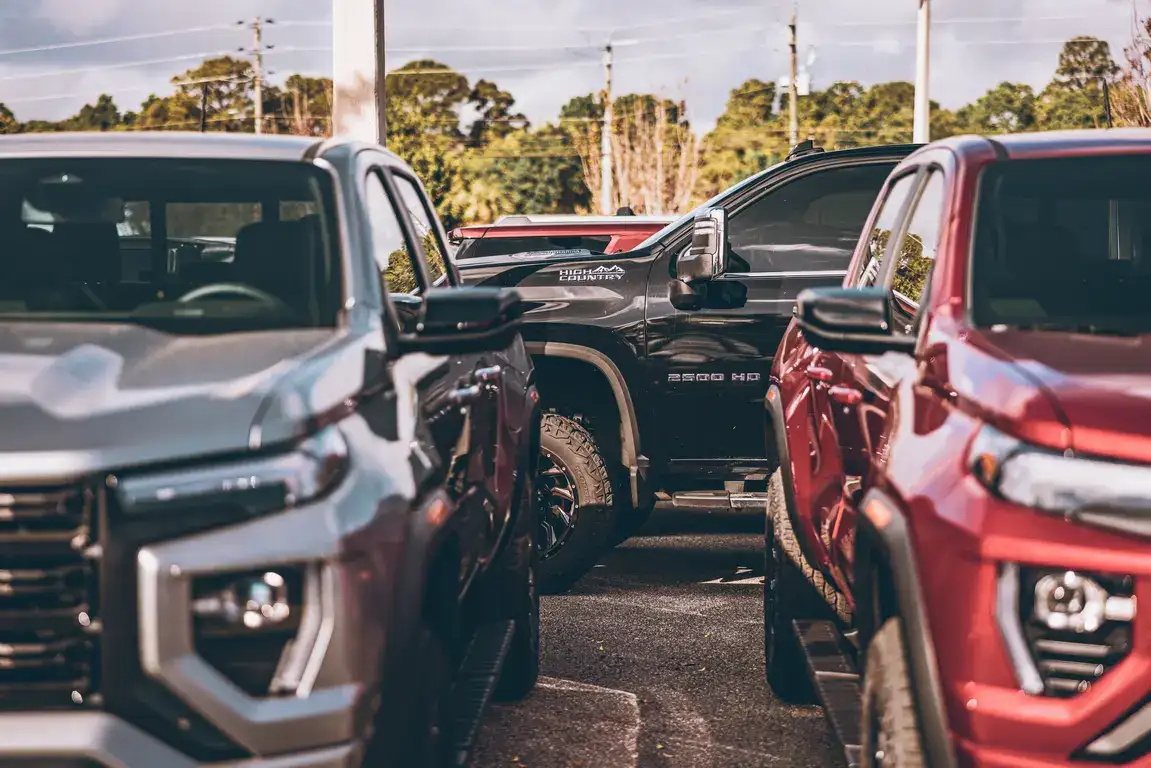
Do You Actually Need a Truck? Ask These 3 Questions First
The honest starting point for any first-time truck purchase is a gut-check, and most salespeople will not be the ones to give it to you. Before you walk onto any lot, answer three questions with genuine honesty: How often will you tow or haul in a typical month? What is your primary daily driving environment, city streets, highway, or rural roads? And do you have the parking clearance and garage space to accommodate a vehicle that is significantly larger than what you are replacing?
Trucks cost more to buy, more to insure, more to fuel, and more to maintain than comparable SUVs or sedans. They earn back that premium through capability, towing, hauling, off-road access, and the ability to carry things that would not fit in any other kind of vehicle. If you use that capability regularly, a truck is one of the best value propositions in the automotive market. If you use it twice a year to help a friend move and the rest of the time you are commuting alone on I-95, you are paying a significant capability tax for a truck bed that mostly sits empty.
That said, plenty of first-time truck buyers find that owning a truck changes their behavior, they take on projects they would have hired out, they buy things in bulk that were impractical before, they start camping or trailering. If you are on the fence about whether you need a truck, the answer is often yes, once you have one, you will wonder how you managed without it. The question is whether the right truck for you is a compact midsize or a full-size, and that distinction matters more than most first-time buyers realize.
Canyon vs. Sierra 1500: Choosing Your First GMC Truck
The most important decision most first-time truck buyers face is not which trim level to choose, it is whether to buy a midsize truck or a full-size one. For GMC buyers, that means Canyon versus Sierra 1500, and the two vehicles serve genuinely different use cases.
The GMC Canyon is a midsize truck powered by a 2.7-liter TurboMax four-cylinder producing 310 horsepower and 430 lb-ft of torque, best-in-class torque for its segment. It tows up to 7,700 lbs when properly equipped, which covers the vast majority of what a first-time truck buyer will ever haul: a boat, a utility trailer, a small camper. It is meaningfully easier to park than a full-size Sierra, more maneuverable in urban environments, and returns better fuel economy in mixed driving. For a first truck buyer in a Florida coastal town or city environment, where tight parking lots, crowded shopping centers, and narrow streets are daily realities, the Canyon’s smaller footprint is a genuine daily-life advantage.
The Sierra 1500 is the larger, more capable platform. With the 5.3L V8, it tows up to 11,200 lbs in standard configurations; with the 6.2L V8, up to 13,100 lbs, and with the 3.0L Duramax turbodiesel, up to 13,300 lbs, in each case with the right tow package. The Sierra has more payload capacity, a larger bed, and a stronger resale value track record compared to most midsize competitors. It is the right choice if you regularly haul heavy loads, tow a larger boat or fifth-wheel trailer, or anticipate your truck needs growing over the life of ownership.
The practical rule of thumb: if you are not sure you need a full-size truck, start with the Canyon. It does everything most people actually need from a truck, fits more naturally into daily Florida life, and costs less at every point in the ownership cycle. If you know you need 10,000-plus pounds of towing capacity or you are hauling crews and equipment for a trade business, the Sierra 1500 is the platform to buy.
| GMC Canyon | GMC Sierra 1500 | |
| Engine | 2.7L TurboMax (310 hp) |
2.7L / 5.3L / 6.2L / Duramax |
|
Max Tow Capacity |
7,700 lbs | Up to 13,300 lbs (Duramax) |
| Parking/Maneuverability | Midsize, easier in cities |
Full-size, larger footprint |
|
Best Use Case |
Light-moderate towing, daily use | Heavy towing, frequent hauling |
| 2027 MY Status | Carryover; production starts Oct 2026 |
Full redesign; arriving dealers late 2026 |
Cab and Bed Configurations Explained
Trucks come in a combination of cab sizes and bed lengths, and the permutation you choose affects everything from daily practicality to towing capacity to resale value. First-time buyers often over-buy on bed length and under-think the cab configuration.
Cab configurations on the Sierra 1500 run from Regular Cab (two doors, front seat only) to Double Cab (two full-size front doors, two smaller rear-access doors, rear seat with limited legroom) to Crew Cab (four full-size doors, a full rear seat with adult-usable legroom). The Canyon uses similar naming, Regular Cab, Extended Cab, and Crew Cab. For a first-time buyer who has a family, commutes with passengers, or simply values a comfortable interior, Crew Cab is almost always the right answer. Regular Cab makes sense almost exclusively for buyers who tow frequently and want to minimize the wheelbase for easier maneuvering with a trailer.
Bed lengths on the Sierra 1500 come in three sizes: short bed at 5 feet 8 inches, standard bed at 6 feet 6 inches, and long bed at 8 feet. The short bed is the most popular configuration because it pairs well with the Crew Cab and keeps the overall truck length manageable. The 6-foot-6 standard bed covers the needs of most buyers, it fits a standard sheet of plywood flat with the tailgate up and gives you enough room to carry most landscaping or construction loads without hanging anything off the back. The 8-foot long bed is for buyers who regularly haul full lumber runs or need maximum cargo volume; paired with a Crew Cab, the resulting truck length makes parking in many Florida commercial areas genuinely difficult.
One important distinction for Section 179 planning: only Sierra 1500s with a cargo bed of at least 6 feet avoid the IRS’s heavy SUV cap. The short-bed Crew Cab, despite a GVWR over 6,000 lbs, is treated as an SUV for this purpose and is subject to an annual cap that the IRS adjusts each year. Confirm the current figure and your own eligibility with your tax professional before making a purchase decision on this basis; nothing here is tax advice.
4WD vs. 2WD, Payload, and Towing, What Beginners Get Wrong
First-time truck buyers make three consistent mistakes when reading spec sheets, and understanding them before you shop prevents you from either overpaying for capability you do not need or buying a truck that cannot do what you thought it could.
Mistake one: assuming 4WD is always better. Four-wheel drive costs roughly 1 to 2 MPG combined against the equivalent two-wheel-drive configuration, adds $2,000 to $3,500 at purchase, and adds mechanical complexity, another differential, a transfer case, additional driveshafts, that requires its own maintenance. In Florida, where roads are flat, ice is essentially nonexistent, and most driving is on paved surfaces, two-wheel drive is sufficient for the large majority of truck buyers. If you are hauling a boat to a wet ramp or driving on unpaved access roads in state parks, 4WD earns its keep. If your entire use case is paved surfaces in Brevard County, 2WD saves you money every year you own the truck.
Mistake two: confusing payload capacity with towing capacity. These are different numbers measuring different things. Towing capacity is how much weight you can pull behind the truck on a trailer. Payload capacity is how much weight you can put in or on the truck itself, in the bed, in the cab, and in any tongue weight transferred from the trailer hitch. A Sierra rated to tow 11,000 lbs might have a payload capacity of 1,900 lbs on that specific configuration. Overloading the payload while towing is a real and dangerous mistake that first-time buyers make by focusing only on the towing number. The payload label on the door jamb of every Sierra and Canyon is the authoritative number, not the brochure figure.
Mistake three: buying too much truck. A Crew Cab Sierra 1500 with the 6.2L V8 and every option is a magnificent truck. It is also over 81 inches wide, more than 20 feet long in long-bed configurations, and will cost you $90-plus per tank of premium fuel when it is running empty. If your actual use case is driving to work five days a week and hauling a Sea-Doo to the ramp on weekends, you are paying a significant premium for capability that you will use rarely. Match the truck to the use case, not to an aspirational version of the use case.
Real Ownership Costs Beyond the Sticker Price
The sticker price of a truck is the beginning of the financial conversation, not the end. First-time truck buyers who budget only for the monthly payment are regularly surprised by the other costs that come with full-size truck ownership in Florida.
Insurance runs higher for trucks than for most passenger vehicles. Full-size trucks like the Sierra and Silverado typically run $220 to $290 per month for full coverage in Florida, among the highest in the country due to the state’s high accident rates, theft exposure, and extreme weather claims. A comparable sedan might run $200 to $275 per month, so the gap between truck and car insurance is sometimes smaller than buyers expect, though trucks carry additional risk from their load capacity and the activity profiles their owners tend to have.
Fuel costs are a significant variable. A Sierra 1500 with the 5.3L V8 averages 15 to 18 MPG in combined real-world Florida driving, city traffic with AC running pulls the number toward the lower end. At Brevard County fuel prices near $3.80 per gallon for regular unleaded, a driver covering 15,000 miles per year will spend roughly $3,200 to $3,800 annually on fuel in a V8 Sierra. A Canyon with the 2.7L TurboMax, which returns 17 to 20 MPG combined in real-world Florida driving, would spend roughly $2,900 to $3,400 on the same mileage. The fuel cost difference over five years of ownership is $1,500 to $4,500, real money, though it narrows if you regularly use the Sierra’s towing capability.
Tires are the ownership cost most buyers underestimate. Truck tires are significantly more expensive than passenger car tires, and a set of four LT-rated tires for a Sierra 1500 or Canyon AT4 runs $800 to $1,400 installed. Truck tires wear faster when the truck is driven lightly loaded because the suspension and drivetrain geometry are optimized for heavy use. Plan on a tire replacement every 40,000 to 55,000 miles depending on the tire and your driving habits. Over a 150,000-mile truck life, that is three or four tire sets, a cost that does not appear in the monthly payment.
Vehicle registration in Florida is calculated partly by vehicle weight, which means trucks register at a higher annual cost than passenger cars. The difference is modest, typically $50 to $150 more per year depending on the gross vehicle weight rating, but it is one more line in the ownership cost total.
|
Ownership Cost |
GMC Canyon | GMC Sierra 1500 V8 | Notes |
| Insurance (FL avg/mo) | ~$200–220 | ~$234–248 |
Full coverage, Florida rates |
|
Fuel (15K mi/yr) |
~$2,900–3,400 | ~$3,200–3,800 | At $3.80/gal, Brevard County |
| Tire set (installed) | $700–1,100 | $800–1,400 |
Every 40–55K miles |
|
Registration (FL/yr) |
Moderate | Higher by weight class |
Varies by GVWR |
Timing Your Purchase: 2026 Clearance vs. 2027 Arrival
If you are buying a GMC truck this fall, timing matters more than it does at most other points in the model cycle, because the 2027 Sierra 1500 and 2027 Canyon are both entering production and arriving at dealers before the end of 2026.
The 2027 Sierra 1500 represents the most significant redesign in the Sierra’s recent history. GMC has introduced entirely new sixth-generation V8 engines, a new 5.7-liter and a new 6.6-liter, along with a fully redesigned interior featuring over 60 inches of combined digital displays and a 16.3-inch infotainment screen on the flagship Denali Ultimate. The 2027 Canyon enters production in October 2026 as a carryover model, with updated styling and interior revisions rather than a new generation. The distinction matters for timing: the Sierra’s change is generational, which creates the deeper clearance pressure on outgoing 2026 inventory, while the Canyon’s is a standard model year transition with a smaller discount window.
What this creates for buyers right now is a classic clearance opportunity. As 2027 inventory arrives at Starling GMC Titusville through October and November, 2026 model year Sierra and Canyon trucks will be available at meaningful discounts, typically $3,000 to $6,000 below sticker through dealer incentives, rebates, and negotiated savings. A 2026 Sierra 1500 is not a lesser truck because the 2027 exists; it is the same excellent vehicle you were going to buy, available for less money while the manufacturer motivates dealers to move the outgoing inventory.
The trade-off is real: the 2027 comes with the new V8 engines, a more modern interior, and the full factory warranty clock starting from day one with no existing miles. For buyers who prioritize the newest technology and plan to keep the truck for 10-plus years, waiting for the 2027 makes sense. For buyers who want the best value per dollar right now and are comfortable with a truck that is excellent but not the newest model year, September and October 2026 represent the best purchase window the Sierra and Canyon lineup will offer for some time.
Take Your First Truck Home From Starling GMC Titusville
At Starling GMC Titusville, we work with first-time truck buyers regularly, and we know that the questions you have when you walk in, about cab configurations, towing packages, the difference between 4WD and 2WD, and what to actually look for on a window sticker, are the same questions every new truck owner has before they become a truck person.
Our team offers extended test drives so you can get a genuine feel for how a Canyon or Sierra handles on Brevard County roads, a full walk-through of trailering basics for buyers who plan to tow, and a no-pressure comparison of trim levels across the 2026 inventory available right now. We will also walk you through the 2027 incoming units so you can make an informed decision on timing with full information on both sides of that choice. Browse current Canyon and Sierra inventory on our website, or come into the showroom and let us find the right first truck for you.
Conclusion
Buying your first truck is a decision that tends to be permanent in the best way, most people who buy one truck buy another when the first one wears out, because the capability becomes part of how they live. The keys to making the right first purchase are matching the truck size to your actual use case (Canyon for most first-timers, Sierra 1500 for serious towers and haulers), understanding the real ownership costs beyond the monthly payment, choosing the right cab and bed combination for your life rather than an aspirational version of it, and taking advantage of the current purchase window while 2026 clearance inventory is available and 2027 models are arriving. The GMC Sierra and Canyon are two of the most capable, reliable, and well-designed trucks on the market today. Your first truck is the beginning of something you will likely be doing for the rest of your driving life.

0 comment(s) so far on First-Time Truck Buyer Guide: What to Know Before Buying a GMC Sierra or Canyon