




2026 GMC Hummer EV vs Tesla Cybertruck vs Rivian R1T: The Electric Super Truck Showdown
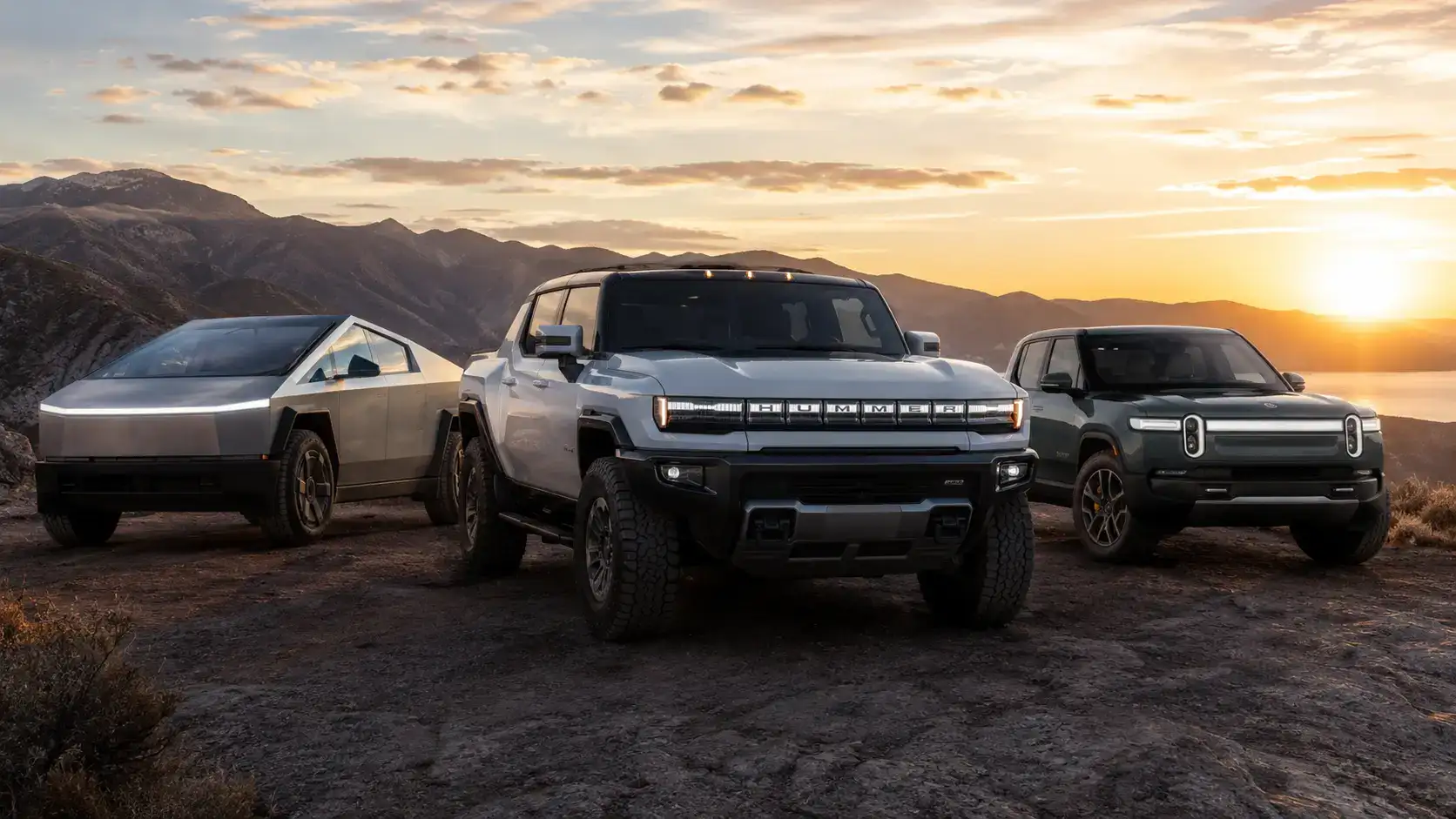
The electric super truck segment exists because a specific kind of buyer decided that capable was not enough, they wanted maximum. Maximum power, maximum technology, maximum presence, and real-world utility that makes a gas truck feel ordinary by comparison. In 2026, three vehicles define this segment: the GMC Hummer EV, the Tesla Cybertruck, and the Rivian R1T. All three are genuinely impressive machines. All three are genuinely expensive. And all three have made different choices about where to lead and where to compromise.
At Starling GMC in Titusville, we sell the Hummer EV, and we are direct about what that means for this comparison. The Hummer leads in towing capacity, off-road hardware depth, and the kind of visual and mechanical presence that makes it the defining statement in this segment. The Cybertruck is faster. The R1T is the most driver-focused. We will tell you all of that directly, because the Hummer’s case is strong enough that it does not need us to hide the competition’s strengths to make it.
At a Glance, Hummer EV vs Cybertruck vs R1T Quick Specs
Before going deep on each vehicle, the spec table below gives you the side-by-side foundation. Three vehicles that look entirely different, carry entirely different design philosophies, and appeal to buyers with different priorities, but all three operating at a level of performance that no gasoline truck in this price range can match across the board.
All figures reflect 2026 model year data from Edmunds, manufacturer sources, and US News & World Report. The Hummer EV specs show the 3X tri-motor performance configuration and the Hummer EV Pickup’s lineup-best towing capability separately, because the 1,000-horsepower 3X and the maximum-towing configuration are not the same setup.
Side-by-Side Spec Comparison Table (MSRP, HP, Range, Towing, Charging)
|
Specification |
2026 GMC Hummer EV | 2026 Tesla Cybertruck | 2026 Rivian R1T |
| Starting MSRP | ~$98,845 (3X tri-motor) | $79,990, AWD / $114,990, Cyberbeast |
$72,885, Dual Standard |
|
Peak Horsepower |
1,000 HP (3X tri-motor) / 570 HP (2X dual) | 845 HP (Cyberbeast) / 600 HP (AWD) | 1,025 HP (Quad) / various configs |
|
EPA Range |
Up to 367 miles (3X) | 325 miles (AWD) / 320 miles (Cyberbeast) | Up to 420 miles (Dual Max pack) |
| Max Towing | 12,000 lbs max (2X); up to 10,600 lbs (3X) | 11,000 lbs (both trims) |
11,000 lbs (when equipped) |
|
Battery Architecture |
800V Ultium / up to 205 kWh | 800V / 123 kWh | Multi-pack: 92.5 / 108.5 / 140 kWh |
| DC Fast Charge | Up to 350 kW | 325 kW NACS Supercharger |
200 kW NACS |
|
0-60 mph |
3.0 sec (Watts to Freedom) | 2.6 sec (Cyberbeast) / 4.1 sec (AWD) | 2.5 sec (Quad) / 3.4 sec (Tri) |
| CrabWalk / Equivalent | Yes, standard | No |
Kick Turn (Quad, OTA) |
|
Off-Road Max Approach |
49.7 degrees | Not rated | Not rated |
| Apple CarPlay | No (removed 2026) | No |
No |
|
Infotainment |
13.4-in Google Built-In | 18.5-in Tesla OS | 15.6-in Rivian OS |
| Super Cruise / ADAS | Super Cruise (3-yr trial) | FSD / Autopilot |
Highway Assist |
Power and Performance, How Each Truck Feels Off the Line
Numbers tell part of the story. The 0-60 times in this segment are genuinely shocking to anyone who associates truck with slow, all three vehicles are faster than sports cars that cost half as much. But the way each vehicle delivers that performance is as different as the vehicles themselves, and for the buyer who will spend years living with their choice, the character of the performance matters as much as the numbers.
The Hummer EV is the heaviest vehicle in this group, approximately 9,000 pounds in the 3X tri-motor configuration, and the performance it delivers at that weight is a mechanical statement that nothing in the truck market matches. The Cyberbeast is the quickest point-to-point. The R1T Quad is the most precise handler. Here is how they compare in depth.
GMC Hummer EV, 1,000 HP, Watts to Freedom, and the Heaviest Hitter
The Hummer EV 3X delivers 1,000 horsepower from three electric motors, one at the front axle and two at the rear, through GM’s Ultium 800-volt architecture. Watts to Freedom mode pre-conditions the battery for maximum output, lowers the suspension for better aerodynamics, and releases all available torque in a single launch event that propels a 9,000-pound truck to 60 mph in approximately 3.0 seconds. That is not a typo. A vehicle that weighs more than most full-size trucks reaches sports car acceleration numbers because the physics of electric motor torque delivery, full torque from 0 RPM, changes what is possible at this mass.
In normal daily driving, the Hummer EV is surprisingly docile. The 800-volt Ultium architecture enables smooth, predictable power delivery across all five drive modes: Normal, MyMode, Tow/Haul, Off-Road, and Terrain. The Extract Mode air suspension adjusts ride height automatically based on the selected mode, adding 6 inches of lift in its highest off-road setting. The tri-motor configuration also enables torque vectoring, the ability to send power to individual wheels for traction control and cornering stability that a conventional drivetrain cannot replicate. This is not performance theater; it has direct applications in the off-road environments that define the Hummer EV’s mission.
Tesla Cybertruck Cyberbeast, Tri-Motor Speed and Steer-by-Wire
The Cyberbeast is the fastest vehicle in this comparison with a 0-60 time of 2.6 seconds, four-tenths quicker than the Hummer EV’s Watts to Freedom launch. It achieves this from 845 horsepower through a tri-motor configuration with rear torque vectoring and Tesla’s steer-by-wire system, which replaces the mechanical connection between the steering wheel and front wheels with electronic actuators. The result is adjustable steering ratio, lighter at low speeds for parking, more weighted at highway speeds, and a driving feel that is distinctively different from any conventional truck. Cyberbeast owners either love the steer-by-wire feel immediately or find it takes adjustment; it is not a neutral characteristic.
The Cyberbeast’s 11,000 lb towing capacity is slightly above the Hummer EV 3X’s reported 10,600 lb maximum, but below the Hummer EV Pickup lineup’s 12,000 lb maximum when configured for towing. Its payload of 2,271 lbs is higher than the Hummer’s. The stainless steel exoskeleton is polarizing by design, Tesla made no attempt to make the Cybertruck look conventional, and the result is a vehicle that generates strong reactions in every direction. Build quality has improved from the 2024 launch year per Consumer Reports tracking, but questions about panel fit and long-term material durability remain present in owner data.
Rivian R1T Quad-Motor, The Driver’s Electric Truck
The Rivian R1T Quad-Motor produces 1,025 horsepower, technically more peak output than the Hummer EV, and reaches 60 mph in 2.5 seconds, making it the quickest-accelerating vehicle in this comparison when both are measured at their respective peak configurations. The R1T’s performance character is defined by its precision: the quad-motor setup with individual wheel torque control creates handling agility that the Hummer EV and Cyberbeast do not match. Car and Driver testing has consistently noted the R1T as the most car-like to drive of the electric truck group, praise that reflects Rivian’s deliberate focus on the driving experience as a primary design criterion.
The R1T is also the most adventure-focused truck in terms of storage design. A front trunk (frunk), a rear bed, and the unique Gear Tunnel, a pass-through storage compartment built into the truck’s midsection, create a cargo versatility that neither the Hummer nor the Cybertruck matches. The R1T Dual Standard starts at $72,885, making it the lowest entry point in this comparison by a significant margin. However, reaching the Quad-Motor configuration’s performance requires a $121,885 investment, squarely in Hummer territory.
Verdict, Which Has the Most Useful Performance?
The Cyberbeast wins the stopwatch. The R1T Quad wins on handling precision. The Hummer EV wins on useful performance, the combination of lineup-best towing capability when properly configured, off-road torque vectoring, CrabWalk maneuverability, and Extract Mode lift that translates acceleration numbers into real-world capability across the widest range of situations a Space Coast truck buyer will encounter. Going fast in a straight line is one dimension of performance. Towing heavy trailers with confidence, climbing 18-inch verticals, diagonally maneuvering through a tight boat ramp at Parrish Park, these are the performance metrics that define truck ownership. The Hummer EV leads on all of them.
Range, Charging, and Real-World Efficiency
Range anxiety is the most common objection to electric truck ownership, and it is a legitimate concern that deserves honest treatment rather than dismissal. The good news for Florida buyers is that the charging infrastructure argument looks better here than almost anywhere else in the country. The range argument involves more nuance, because what a truck’s EPA sticker says and what it delivers under towing conditions are very different numbers, and any buyer who intends to tow regularly needs to understand that gap before committing.
The specs below reflect EPA-rated range for each vehicle’s relevant configuration. Real-world highway range at 70 MPH is typically 15 to 20 percent below EPA figures across all three vehicles.
EPA Range Compared, Who Goes Furthest?
The Rivian R1T with the Max battery pack in Dual-Motor configuration reaches an EPA-estimated 420 miles, the highest range figure in this comparison and one of the highest in any electric truck sold in the US market. The Hummer EV 3X reaches up to 367 miles EPA. The Cybertruck AWD reaches 325 miles, and the Cyberbeast comes in at 320 miles. Rivian’s range advantage is real and meaningful, particularly for buyers who plan to take the R1T on long road trips without charging stops. The caveat is that the Max battery pack that enables 420 miles pushes the Dual’s price from $72,885 to $84,990, still below the Hummer’s entry point.
For Space Coast buyers whose primary driving is within Brevard County and the surrounding area, with occasional trips to Orlando (approximately 45 miles), all three vehicles provide more than adequate range for daily use. The range comparison becomes most relevant on longer trips, Jacksonville (200 miles), Miami (225 miles), Tampa (170 miles), where a single charging stop may be required for vehicles at the lower end of the range spectrum if the trip is not well-planned. Florida’s charging network, particularly along I-95 and the Turnpike, is among the most developed in the country.
DC Fast Charging Speed and NACS Supercharger Access
All three vehicles use the NACS (North American Charging Standard) charging port for 2026, meaning all three have access to Tesla’s Supercharger network, the largest and most reliable fast-charging network in the United States. The Hummer EV’s 800-volt architecture enables up to 350 kW DC fast charging, allowing the 180 kWh battery to add approximately 100 miles of range in as little as 10 minutes under optimal conditions. The Cybertruck charges at up to 325 kW on the Supercharger network, adding approximately 135 miles in 15 minutes. The Rivian R1T charges at up to 200 kW on compatible hardware, adding approximately 140 miles in about 20 minutes.
The Hummer EV’s 350 kW charging capability is the fastest in this comparison, a meaningful advantage for buyers who regularly make long trips and want to minimize time at charging stations. In Florida, where summer heat can push energy consumption higher and where the charging network is concentrated along major corridors, charging speed translates directly into trip efficiency. The Hummer EV’s ability to recover substantial range in under 15 minutes makes it the most practical choice for buyers who regularly travel beyond its immediate range and back.
Range When Towing, The Real-World Penalty
Every electric vehicle loses significant range when towing, and electric trucks are no exception. The towing range penalty is approximately 50 to 60 percent of rated range across all three vehicles under typical highway towing conditions. The Hummer EV towing a 7,000 lb boat trailer at 65 MPH will see approximately 150 to 180 miles of real-world range, roughly half its unloaded EPA figure. The Cybertruck and R1T towing similar loads see comparable penalties, with DriveAuthority testing showing approximately 110 to 120 miles at a 4,500 lb trailer weight for the Cyberbeast. At heavier loads approaching the towing maximum, range drops further.
For Space Coast buyers towing to Canaveral National Seashore, Merritt Island, or local boat ramps, distances of 20 to 50 miles round trip, the towing range penalty is irrelevant. For buyers planning to tow a camper or boat trailer across the state on a single trip, charging stops become part of the journey plan regardless of which vehicle they choose. The Hummer EV’s faster charging speed is an asset in this scenario, spending 15 minutes at a fast charger rather than 30 minutes changes the practical character of a long towing trip significantly.
Why EV Trucks Work Better in Florida’s Climate
Florida’s flat terrain and warm temperatures create ideal conditions for electric vehicle efficiency in ways that cold-climate owners do not experience. EV range drops significantly in sub-freezing temperatures due to battery thermal management demands, a concern that is essentially irrelevant for Titusville-area buyers. Florida’s flat roads eliminate the aggressive elevation-change energy demands that mountain driving creates. And the warm climate means the battery operates in its optimal temperature range almost year-round, delivering consistently close-to-rated range without cold-weather penalties.
The trade-off is heat management. Florida’s summer temperatures, regularly in the 90s with high humidity, stress battery cooling systems. All three vehicles manage this with active liquid cooling, and none has shown documented systematic heat-related range degradation in Florida’s climate in owner data. The result is that a Hummer EV, Cybertruck, or R1T purchased in Titusville will likely deliver range performance closer to its EPA rating on a consistent year-round basis than the same vehicle operated in the northern US.
Towing, Payload, and Off-Road Capability
This is the category where the Hummer EV most clearly separates itself from the competition, not just in the numbers, but in the depth of hardware, engineering, and design that makes those numbers achievable in real-world conditions. Towing is not just a rating; it is the intersection of power, control, stability, and technology. The Hummer EV’s advantage in this comparison is not narrow.
All towing figures reflect properly equipped configurations per manufacturer specifications. Real-world towing capability is affected by trailer type, weight distribution, road conditions, and operator setup.
Maximum Towing Compared (12,000 lb vs 11,000 lb vs 11,000 lb)
The GMC Hummer EV Pickup lineup leads this comparison with a maximum towing capacity of 12,000 lbs when properly configured, 1,000 lbs more than either the Tesla Cybertruck or the Rivian R1T, both of which are rated at 11,000 lbs maximum. The Hummer EV 3X tri-motor performance configuration is reported at up to 10,600 lbs, which means buyers should choose the Hummer configuration around their priority: maximum towing or maximum 1,000-horsepower performance. In practical terms, the Hummer EV lineup gives buyers the strongest combination of electric-truck towing ceiling and off-road hardware depth in this group.
The Hummer EV also provides a more comprehensive towing technology package than either competitor. Hitch Guidance with camera assistance, Blind Zone Steering Assist that extends to trailer lengths, auxiliary trailer camera integration, Transparent Trailer View, and the Tow/Haul drive mode that optimizes power delivery and regenerative braking for trailer management are all included. The Cybertruck’s towing technology is competitive at Tesla’s upper tier but lacks the depth of integration that GM’s ProGrade-inspired approach delivers. The R1T’s towing support is basic by comparison, functional, but not the feature-rich experience the Hummer EV provides.
Off-Road Hardware Showdown, CrabWalk vs Cyberbeast vs Quad Motor
CrabWalk is the Hummer EV’s signature off-road maneuverability feature: a four-wheel steering mode that turns all four wheels at the same angle, allowing the truck to move diagonally rather than conventionally. At a tight boat ramp, a narrow trail, or a campsite where positioning a 9,000-pound truck requires precision that conventional steering cannot deliver, CrabWalk changes what is possible. It is not a gimmick, it is an engineering solution to the fundamental problem of maneuvering a very wide, very heavy truck in confined spaces. No other vehicle in this comparison offers it.
The Cyberbeast brings steer-by-wire as its primary steering differentiation, variable ratio steering that adjusts to driving conditions, alongside a front suspension with 20.3 inches of travel. It does not have CrabWalk or an equivalent diagonal movement capability. The Rivian R1T Quad brings individual wheel torque control that enables its Kick Turn feature, spinning the truck in place, on Quad-Motor models via over-the-air update. The Kick Turn is impressive as a demonstration, but its practical off-road applications are narrower than CrabWalk’s diagonal movement capability. In the off-road hardware depth category, the Hummer EV has engineered the most comprehensive solution.
Which One Actually Performs Off the Pavement?
All three trucks can do more off-road than most buyers will ever ask of them. The meaningful distinction is which one is built specifically for it versus which ones treat off-road capability as a capable secondary feature. The Hummer EV is the only vehicle in this comparison designed from the ground up as an off-road machine that also functions as a daily driver, not a daily driver with off-road packages added. Its 49.7-degree approach angle, 18-inch vertical obstacle clearance, 13 inches of wheel travel, available full underbody armor, Extract Mode’s 6-inch lift range, the camera-based virtual spotter system, and the front and rear electronic locking differentials (available with Extreme Off-Road Package) represent a purpose-built off-road capability that goes beyond what the Cybertruck and R1T deliver in their standard configurations.
For Titusville and Space Coast buyers whose off-road use includes Florida terrain, loose sand, muddy improved roads, boat ramps, and the varied surfaces of Merritt Island and Canaveral National Seashore, all three trucks are more than capable. For buyers who want the most capable off-road tool in this group, the Hummer EV is the answer, and its dominance in this category is not incremental.
Interior, Technology, and Daily Livability
At these price points, interior quality is not optional, it is expected. Buyers spending six figures on a truck have the right to expect materials, technology, and daily comfort that justify the investment. All three vehicles deliver in different ways, and the comparison is more interesting than a simple hierarchy suggests.
The Hummer EV’s interior has been consistently described by independent reviewers as more rugged than chic at the material level, appropriate for a vehicle designed to go places where upholstery might get dirty. The technology integration is strong. The R1T has the most genuinely premium interior materials of the three. The Cybertruck’s interior is the most minimalist.
Cabin Quality and Materials Compared
The Rivian R1T has the strongest interior material story in this comparison. Recycled and sustainable materials, genuine wood trim options, clean surface design, and a layout that feels deliberate and premium create an interior impression that exceeds the Hummer EV’s at equivalent trim levels. Edmunds noted the R1T’s interior as ‘a serene yet functional space’, language that does not get applied to the Hummer EV’s more utilitarian approach. The Hummer EV’s cabin is well-equipped and comfortable, with synthetic leather upholstery, tri-zone climate control, heated rear seats, and a two-tone interior treatment that reads as premium in the context of its off-road mission. It is not a luxury SUV interior, it is a high-performance truck interior.
The Tesla Cybertruck’s interior is the most spartan of the three. A clean dashboard with minimal physical controls, a front-of-console touchscreen orientation, and the stainless steel aesthetic carried into interior surfaces create a cabin that appeals strongly to buyers who want the Tesla design language and creates friction for buyers accustomed to conventional truck ergonomics. Storage is cleverly designed, particularly the under-seat and under-bed options, but the minimalist approach means the Cybertruck’s cabin generates more polarized reactions than either competitor.
Infotainment, Google Built-In vs Tesla OS vs Rivian’s System (CarPlay availability)
None of the three vehicles in this comparison offers Apple CarPlay or Android Auto in 2026, a fact worth understanding before purchase. The Hummer EV lost wireless CarPlay integration for 2026, joining the Cybertruck and R1T in relying entirely on their native operating systems. The Hummer EV’s 13.4-inch screen runs Google Built-In, providing native Google Maps, Google Assistant, and app access through the Google ecosystem without requiring a paired phone. Google Assistant voice recognition on the Hummer EV is consistently rated by Edmunds and other publications as more effective than average, the Google ecosystem’s depth of voice command capability translates into a genuinely useful in-vehicle assistant.
Tesla’s 18.5-inch landscape screen running Tesla OS is the largest front display in this comparison and the most tightly integrated with the vehicle’s systems, Tesla has built its entire vehicle architecture around software integration in a way that GM and Rivian are still working toward. Nearly every vehicle function runs through the screen. The upside is a clean interface with deep vehicle control. The downside is the near-total absence of physical controls, which some buyers dislike in a vehicle that may be used with wet, sandy, or gloved hands.
Hands-Free Driving, Super Cruise vs Autopilot/FSD vs Highway Assist
Super Cruise is available on the Hummer EV with a 3-year complimentary trial, the same hands-free highway driving system available on the Sierra 1500 Denali, covering over 400,000 miles of compatible divided highway in North America including Florida’s I-95, Turnpike, and I-4. Super Cruise uses a driver attention camera rather than hands-on-wheel detection, enabling genuinely hands-free operation on compatible roads, and is one of the few systems that works while towing a trailer. For a truck buyer who regularly makes the I-95 run between Titusville and Miami or the Turnpike to Orlando, Super Cruise’s coverage and hands-free towing capability represent a meaningful daily use advantage.
Tesla’s Autopilot is standard, with Full Self-Driving (Supervised) available as an add-on subscription. FSD operates on a camera-only neural network approach and is more widely deployed than Super Cruise in terms of road coverage, but is in ‘supervised’ mode, requiring driver attention and readiness to intervene. The Rivian R1T’s Highway Assist provides lane centering and adaptive cruise control. Of the three systems, Super Cruise’s towing-compatible hands-free operation on a defined, verified road network is the most directly useful for the truck use case this comparison describes.
Pricing, Incentives, and Total Cost of Ownership
The electric super truck segment is defined by high purchase prices, there is no entry-level option in this group. But within the segment, the pricing structure is more varied than a first glance suggests, and the total cost of ownership picture over five years involves factors beyond the sticker price that meaningfully affect the financial comparison.
Federal EV incentives, electricity costs versus gasoline, depreciation rates, and maintenance savings all factor into a complete ownership cost picture. The sections below address each component honestly.
Starting MSRP vs Real Transaction Price
The Hummer EV 3X starts at approximately $98,845, the tri-motor configuration that delivers 1,000 horsepower and CrabWalk. The 2X dual-motor starts below that figure. The Tesla Cyberbeast starts at $114,990, making it the most expensive entry in this comparison at the performance tier. The Rivian R1T Dual Standard starts at $72,885, the lowest base price, but reaching Quad-Motor performance requires a $121,885 investment. Transaction prices across all three typically reflect the MSRP given the demand for these vehicles; meaningful discounts are uncommon in this segment. Edmunds notes that Hummer EV buyers have been saving approximately 7 percent off MSRP in the current market, a roughly $6,900 savings that is worth factoring into the comparison.
The appropriate price comparison for this segment is not base-to-base but configuration-to-configuration: comparing equivalent performance and feature content across the three vehicles. At the 1,000 HP / tri-motor tier, the Hummer EV 3X and Cyberbeast are within approximately $16,000 of each other, while the R1T Quad comes in at $121,885. The Hummer EV’s value within that performance tier, particularly given its towing leadership and off-road hardware depth, is competitive.
Federal EV Tax Credit and Lease Cash Programs
Federal EV tax credit eligibility for these three vehicles is subject to MSRP caps, buyer income limits, and assembly location requirements under current federal rules. The Hummer EV and Cybertruck are both assembled in the United States, the Hummer EV at GM’s Factory ZERO in Detroit, Michigan, and the Cybertruck at Gigafactory Texas, satisfying the domestic assembly requirement. The Rivian R1T is assembled in Normal, Illinois, also meeting domestic assembly criteria. However, all three vehicles’ MSRPs exceed the $80,000 cap for truck EV tax credits under current federal guidelines, which limits or eliminates the standard $7,500 federal tax credit for most buyers at these price points. Buyers should consult with a tax professional to evaluate their specific eligibility under current rules, which are subject to change. Lease programs may offer manufacturer cash that effectively transfers credit value to the consumer, our finance team at Starling GMC can walk through current Hummer EV lease programs that may structure favorable terms.
Estimated 5-Year Ownership Costs and Depreciation
Electric vehicles as a category cost less to fuel and maintain than equivalent gasoline vehicles, fewer moving parts, no oil changes, no transmission service, and electricity costs that are typically 40 to 60 percent less than gasoline for equivalent miles driven. For a Space Coast buyer driving 15,000 miles annually at Florida’s electricity rates, the Hummer EV’s energy cost advantage over a comparable gasoline super truck is approximately $1,500 to $2,000 per year. Over five years, that represents $7,500 to $10,000 in fuel savings.
Depreciation is the largest single factor in EV ownership cost at this price point. KBB estimates the R1T will depreciate approximately $44,460 over five years, about 61 percent of its starting value lost. Electric vehicles in the $70,000-plus segment have generally depreciated faster than equivalent gasoline vehicles during the current period of rapid technology change, as buyers anticipate improved future models. The Hummer EV’s strong brand identity and off-road exclusivity are expected to support relatively stronger residuals within this group, though precise five-year residual data for 2026 models is not yet available. The three-year Super Cruise trial adds tangible value to the ownership experience during the period of highest depreciation.
Which Electric Super Truck Should You Buy? Our Honest Recommendation. Test Drive the 2026 GMC Hummer EV at Starling GMC Titusville
For most buyers reading this guide, the right answer is the GMC Hummer EV, and not because we sell it, but because of what it actually delivers for the specific use cases that define Space Coast truck ownership. The Hummer EV Pickup lineup’s 12,000-lb maximum towing capability when properly configured, the 3X’s 1,000-horsepower performance, the CrabWalk capability that genuinely changes what is possible at tight ramps and trails, the Extract Mode lift, the 350 kW charging speed, and the unmistakable presence combine into a vehicle that does the widest range of truck things at the highest level.
Choose the Cyberbeast if: 0-60 in 2.6 seconds is the single metric you care about most, you are fully committed to the Tesla ecosystem, or the steer-by-wire driving dynamic specifically appeals to you. Choose the R1T if: interior material quality is your primary criterion, maximum range from the Max battery pack is essential, or the Gear Tunnel’s unique storage design solves a specific need. Choose the Hummer EV if: maximum towing capability, the deepest off-road hardware package, and the most comprehensive daily technology suite in a vehicle with genuine presence and a three-year Super Cruise trial are what you are after. That describes the majority of Space Coast truck buyers who are ready to make the move to electric.
At Starling GMC in Titusville, we carry the Hummer EV lineup and invite you to experience Watts to Freedom, CrabWalk, and the full technology suite in person.
Conclusion
The 2026 GMC Hummer EV, Tesla Cybertruck, and Rivian R1T represent three genuinely different answers to the electric super truck question. The Cyberbeast is the fastest. The R1T has the most refined interior and longest available range. The Hummer EV leads on maximum towing, off-road hardware depth, charging speed, and Super Cruise hands-free capability, the combination that matters most for Space Coast buyers who actually use their trucks for the missions this segment was built for.
Come see the Hummer EV in person at Starling GMC Titusville, 1350 S Washington Ave. No vehicle in this price range makes a stronger first impression, and no vehicle in this comparison is better equipped for what Florida’s roads, boat ramps, and trails demand.

0 comment(s) so far on 2026 GMC Hummer EV vs Tesla Cybertruck vs Rivian R1T: The Electric Super Truck Showdown