




What to Do When Your GMC Lease Ends: Return, Buy, or Swap
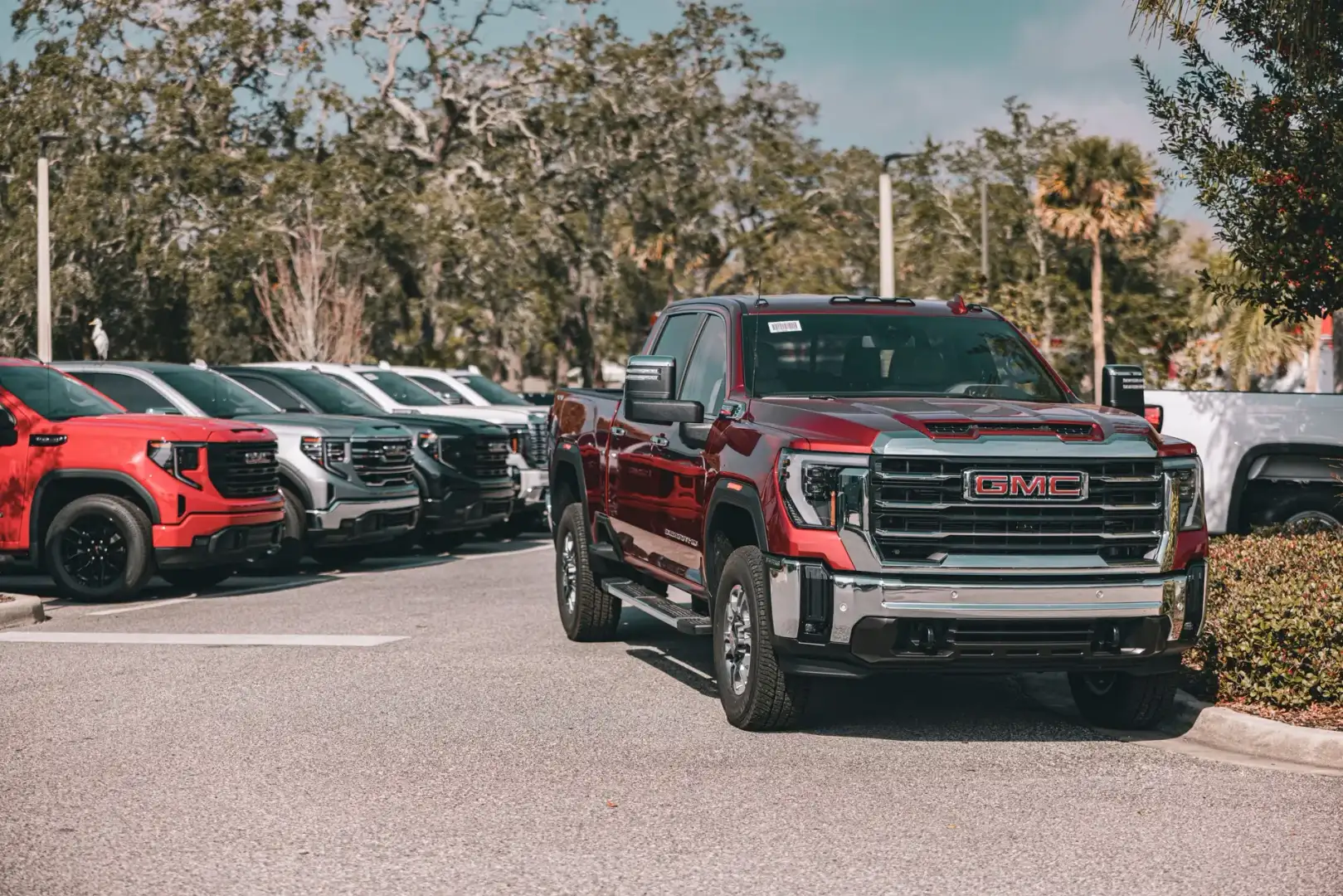
The three real options, the official GM Financial timeline, and what the charges actually are.
When a GMC lease is about to end, most drivers experience a kind of paralysis: they do not know exactly what options they have, how much time they have to decide, or what the financial consequences of each path are. The good news is that there are exactly three options, and all three are manageable if you understand them with enough advance notice.
The three options are: return the vehicle to the dealership at the end of the contract, purchase it at the price established in your contract, or return it and roll into a new vehicle. GM Financial’s own lease-end guide starts the clock earlier than most people expect — it recommends beginning the process about 12 months before your contract matures, and scheduling your complimentary pre-return inspection within 120 days of lease end.
At Starling GMC Titusville we work with lessees at any stage of the process, including those whose contract was originated at another GM dealership. If you have questions about what applies to your specific situation, our finance team is available to walk you through it with no commitment required.
The three real options, and a timeline for each
| Option | What it costs you | When it makes sense |
|---|---|---|
| Return the vehicle | Disposition fee of up to $495 (where your state allows it), plus any excess mileage and excess wear charges | The vehicle is worth about the same as or less than your purchase option price, or you no longer want the model |
| Purchase the vehicle | The purchase option price, plus Florida sales tax and surtax on that amount. No disposition fee. | Your vehicle is worth more on the market than the purchase option price, or you are over on mileage and want to keep it anyway |
| Lease or finance new | Disposition fee may be waived. Any equity in the current vehicle applies toward the new one. | You want a newer vehicle and your current one has positive equity |
Option names and the disposition fee figure are GM Financial’s own. Excess mileage and excess wear charges depend on your individual lease agreement and the condition of the vehicle.
The official timeline
| When | What happens |
|---|---|
| ~12 months before maturity | GM Financial recommends you begin the lease-end process and review your three options |
| Within 120 days of lease end | Schedule your complimentary pre-return inspection (about two to four months out) |
| ~2 months before lease end | Visit the dealership to choose your next vehicle, and schedule the inspection if you have not already |
| By the termination date | Return the vehicle. Sign the Check-in Receipt and Odometer Statement and keep copies. |
| 30 to 45 days after turn-in | Your Lease-End Liability Invoice arrives, showing any amounts owed |
| Within 60 days of turn-in | Any security deposit is returned, less amounts still owed |
Timeline per GMC’s official lease-end guide. Your lease agreement governs the termination date.
Option 1: return the vehicle, the standard path
Returning the vehicle at the end of the lease is the default option. If you take no action, this is the path you end up on. It has its own steps and potential costs that are worth understanding in advance to avoid surprises.
The first step is the complimentary pre-return inspection. GM Financial asks you to schedule it within 120 days of lease end, which in practice means about two to four months out. You can book it at your dealership, at home, or at work. You can schedule it at inspections.openlane.com with your VIN and account number, through MyAccount, by texting LEASEEND to 53721, or by calling GM Financial at 1-800-284-2271.
The reason to do it months ahead rather than on the last day is concrete: if the inspector identifies damage that exceeds normal wear, you have time to repair it yourself — often for less than GM Financial would charge you. GM Financial’s process explicitly allows this. Complete the repairs you choose, then send in the receipts before you return the vehicle.
On the day of return, the vehicle must be delivered with all original equipment present. GM Financial’s return checklist names keys and key fobs, the Owner’s Manual, floor mats, cargo covers, toolkits, spare tires and EV charging cables where applicable. You should also clear your personal data from the infotainment system — garage codes, app logins, saved phone numbers and addresses — and reset it to factory settings, clean the vehicle, cancel any automatic payments, and check whether Florida requires you to return the plate.
The charges that can appear on your Lease-End Liability Invoice are the disposition fee, which GM Financial lists at up to $495 where your state permits it, plus any excess mileage and excess wear charges. The disposition fee may be waived if you lease or purchase another new GM vehicle, or if you exercise your purchase option. Note that it is any new GM vehicle, not only a GMC — a Chevrolet, Buick or Cadillac counts.
Full details are on GM Financial’s lease-end FAQ.
Option 2: buy out your lease, keep your GMC
The purchase option is what it sounds like: you buy the vehicle at the price established in your original contract. GM Financial calls this the purchase option price. It was set the day you signed the lease and does not change, regardless of what has happened in the used vehicle market since.
One thing many lessees do not realize: you do not have to wait until the end of the lease. GM Financial allows you to purchase your leased vehicle at any point during the lease term.
When it makes sense to buy: if the current market value of your vehicle is higher than your purchase option price, you are in a positive equity position. You could buy the vehicle and keep it, or buy it and sell or trade it for more than you paid. In recent years this has been relatively common with trucks and large SUVs such as the Yukon and the Sierra.
To get your number, request a purchase quote from your MyAccount dashboard — the quote is valid for 10 days — or call GM Financial at 1-800-284-2271 with your account number, Social Security number or VIN ready. You can also ask a GM dealership to handle it. One detail worth knowing: non-GM dealerships do not currently process lease purchase requests, so a GMC store like ours can do this for you and an independent lot cannot.
If you decide to buy, you can finance through GM Financial, your own bank or credit union, or through the dealership. Financing a lease buyout works essentially like financing any used vehicle purchase, with rates based on your credit and the vehicle’s value.
Florida sales tax on a buyout: the number you need
When you purchase your leased vehicle, the purchase is a retail sale of a motor vehicle in Florida and sales tax is due on the sale price at that time. Florida’s state rate is 6%. Brevard County adds a discretionary sales surtax of 1%, and that surtax applies only to the first $5,000 of the purchase price.
On a $42,000 purchase option price, that works out to $2,520 in state tax plus $50 in county surtax — about $2,570. On a $55,000 Yukon buyout, roughly $3,350. Either way it is real money you need available or rolled into the financing, and it is separate from the tax you already paid on your monthly lease payments.
Rates confirmed with the Florida Department of Revenue and its county surtax rate table. We are not tax advisors — confirm your own figure with the Brevard County Tax Collector or your tax professional before you sign.
Option 3: trade in your lease toward a new vehicle
The third option, and the one dealerships usually promote most actively, is returning your current vehicle and rolling into a new one. GM Financial calls this “lease or finance new.” Whether it makes sense depends almost entirely on whether your current lease has positive or negative equity.
If you have positive equity — the vehicle is worth more on the market than your purchase option price — that difference becomes an effective down payment on your next vehicle. For a lessee with $3,000 or $5,000 of positive equity, that is a meaningful head start on the next lease or purchase. The disposition fee may also be waived, since you are staying with GM Financial.
If you have negative equity — less common, but it happens — you owe more than the vehicle is worth. You would need to cover that difference out of pocket, or roll it into the next loan. Rolling negative equity forward is rarely a good financial idea: you start the new contract already owing more than the new vehicle is worth, which perpetuates the cycle. Our team can tell you exactly where you stand before you decide anything.
To get a number on your current vehicle, start with our trade-in appraisal page, and see what is available on our new vehicle specials.
Excess mileage and wear: what they will actually charge you
This is the section that worries lessees most as the end of the contract approaches, and for good reason. These are the charges that catch people off guard.
Excess mileage
Here is the honest answer: GM Financial does not publish a single excess mileage rate. Across its lease-end FAQ, its lease-end guide and its own articles, the wording is consistent — mileage above your contracted allowance is billed “at the rate per mile listed in your agreement.” Anyone quoting you a universal per-mile figure is guessing.
Your rate is in your lease agreement, on the line for excess mileage. To work out your exposure, you need three numbers from that document and one from your dashboard:
| Step | Where to find it |
|---|---|
| 1. Your total contracted mileage allowance | Your lease agreement (also shown in MyAccount) |
| 2. Your current odometer reading | Your dashboard |
| 3. Months remaining on the contract | Your lease agreement |
| 4. Your excess mileage rate per mile | Your lease agreement |
Project your mileage forward at your current monthly pace, subtract your allowance, and multiply the overage by your rate. If you are going to land over the limit, you have two realistic levers: cut your monthly mileage for the remainder of the term, or look at whether the vehicle’s market value covers the gap — which is the subject of the section below.
Excess wear: the official thresholds
GM Financial publishes exact measurements for what counts as normal wear and what counts as excess wear. These are the real numbers, straight from its wear and use guidelines:
| Item | Normal wear — no charge | Excess wear — chargeable |
|---|---|---|
| Dings | Fewer than 4 per panel, each under 2 inches | 4 or more per panel, or multiple dings of 2 inches or more per panel |
| Dents | 1 dent of 4 inches or less per panel | 1 dent greater than 4 inches per panel |
| Scratches | 1 scratch under 6 inches per panel | 1 scratch of 6 inches or more per panel |
| Glass | Cracked glass under 1/2 inch in diameter | Cracked glass 1/2 inch in diameter or more, or spider cracks |
| Wheels | Scratches or gouges of 3 inches or less | Scratches or gouges greater than 3 inches |
| Tires | Minimum 4/32-inch tread. Manufacturer’s recommended size and speed rating, regardless of tire brand. | Tread under 4/32 inch, mismatched tires, or tires not matching the original size and specifications |
| Upholstery | Holes of 1/8 inch or less, tears under 1/2 inch, removable stains, minor carpet wear | Holes greater than 1/8 inch, tears of 1/2 inch or more, permanent stains |
| Equipment and mechanical | No missing equipment or broken parts, no warning lights illuminated | Missing equipment including keys and key fobs, cracked headlights, mechanical defects, illuminated instrument panel warning lights |
Thresholds per GM Financial’s published wear and use guidelines.
Two of these are worth calling out, because they are the ones people get wrong:
Tire brand does not matter. GM Financial’s guidelines explicitly accept the manufacturer’s recommended tire size and speed rating “regardless of tire brand.” You do not need to buy the original brand back. What does matter is tread depth — a minimum of 4/32 inch — that the tires match each other, and that they match the original size and specification, including run-flat or self-sealing type where your vehicle came with it. If your GMC came on Michelin Premier LTX tires, the threshold is lower: under 2/32 inch.
An illuminated warning light is a chargeable item. It is also usually the cheapest thing on this list to resolve and the easiest to overlook. If anything is lit on your instrument panel, have it diagnosed before your inspection, not after.
What if you want to extend your lease?
There is a fourth path that many people do not know about, though it is narrower than it is often described. GM Financial allows you to extend your lease by one month past the original scheduled end date. You keep making your regular monthly payment on the same due date, and you must return the vehicle before that extra month ends.
Two things to be clear about. First, it is one month — not a rolling arrangement you can stretch for half a year. Second, and this is the part that costs people money: the extension does not increase your contracted mileage. Every mile you drive during that extra month counts against the allowance you already had.
That makes the extension useful for a specific situation: the vehicle you want has not landed in inventory yet and you need a few weeks of breathing room. It is not a solution for someone who needs several months to decide, and it is not a way to get extra miles.
If you are waiting on a 2027 Sierra or a 2027 Yukon, or you want to see the Sierra EV in person before committing, a one-month extension can bridge the gap. For anything longer, the better conversation is about your purchase option or about what we can order for you. Call GM Financial at 1-800-284-2271 to confirm what your specific contract allows.
What happens to your excess mileage if you trade in early?
This question comes up constantly, and it deserves a straight answer rather than an optimistic one.
What GM Financial actually commits to: the disposition fee may be waived if you lease or purchase another new GM vehicle, or if you exercise your purchase option. That is the one documented concession, and it is worth up to $495.
What it does not commit to: there is no published GM Financial policy that waives or absorbs excess mileage charges because you traded in early. If you see that claim made as a blanket rule, treat it with suspicion.
What actually happens is a question of arithmetic, not policy. Excess mileage charges are an amount you owe. Positive equity is an amount in your favor. If your vehicle’s market value exceeds your purchase option price by more than your mileage overage costs, the equity can cover the charge — not because anyone waived it, but because the numbers net out. If used truck and SUV values hold up the way they have in recent years in Florida, that is a realistic outcome on a Yukon or a Sierra. It is also entirely possible that they do not net out, which is why this needs to be a conversation with real numbers in front of you rather than an assumption.
Separately, any manufacturer pull-ahead or lease-loyalty offer in a given month is a program, not a standing policy — terms change, and whether one exists when your lease matures is something to check at the time, not to count on now.
Coming in two to four months early rather than in the last week of your contract gives you more time to find the right vehicle in inventory, instead of settling for whatever happens to be on the lot the week your contract expires.
Start your end-of-lease conversation at Starling GMC Titusville
At Starling GMC Titusville, our finance team works with lessees at any point in the process, whether the contract was originated here or at another GM dealership. We can review your lease documentation, tell you where your equity position actually stands, and walk you through the implications of each option before you commit to anything.
There is no pressure and no commitment required to have that conversation. Start at our finance department or call us directly. You can also browse current new vehicle specials, or work through the planning side first with our guides on leasing versus buying, buying a 2026 versus waiting for a 2027, and how much GMC you can afford.
Conclusion
The end of a lease does not have to be complicated. There are three options — return, purchase, or roll into something new — and GM Financial’s own timeline gives you up to a year to work through them. The two dates that matter most are the pre-return inspection, which belongs within 120 days of lease end, and the termination date in your agreement.
The three things worth doing early: find your excess mileage rate in your lease agreement so you know your real exposure, get your purchase option price so you know whether you have equity, and get the inspection on the calendar while you still have time to fix anything it turns up. Everything else follows from those three numbers.
The Starling GMC Titusville team is here to help you work through them, without pressure and with clear information. Contact us when you are ready.
Frequently asked questions about GMC lease end
How far in advance should I start planning the end of my GMC lease?
GM Financial recommends beginning the lease-end process about 12 months before your contract matures, and scheduling your complimentary pre-return inspection within 120 days of lease end. The practical minimum is two to four months, which is the window GM Financial gives for the inspection. Starting then still leaves you time to repair anything the inspection finds and to choose your next vehicle without pressure.
How much does GM Financial charge for excess mileage?
GM Financial does not publish a single rate. Its lease-end materials consistently state that mileage above your contracted allowance is billed at the rate per mile listed in your own lease agreement. Check the excess mileage line in that document for your figure, and treat any universal per-mile number you see quoted elsewhere as an estimate rather than a fact.
What is the disposition fee and does everyone pay it?
The disposition fee is an administrative charge from GM Financial for processing the return of the vehicle, listed at up to $495 and applied where your state permits it. It may be waived if you lease or purchase another new GM vehicle, or if you exercise your purchase option. That includes any GM brand, not only GMC. Confirm the specific terms in your lease agreement.
Can I buy the GMC I am leasing even if the contract was not done at Starling GMC Titusville?
Yes. The purchase option is exercised with GM Financial regardless of which dealership originated the contract, and you can do it at any point during the lease rather than only at the end. Request a purchase quote from your MyAccount dashboard, where it is valid for 10 days. Note that non-GM dealerships do not currently process lease purchase requests, so a GM store such as Starling GMC Titusville can handle this for you and an independent lot cannot.
Do I have to pay sales tax when buying my leased vehicle in Florida?
Yes. Purchasing your leased vehicle is a retail sale of a motor vehicle in Florida, so sales tax is due on the purchase price. The state rate is 6%, and Brevard County adds a 1% discretionary sales surtax that applies only to the first $5,000 of the price. On a $42,000 purchase option price that is roughly $2,570 in total. This is separate from the tax you already paid on your monthly lease payments, so budget for it or include it in the financing. Confirm your own figure with the Brevard County Tax Collector or your tax professional.
Can I extend my GMC lease while I decide?
You can extend by one month past the original scheduled end date, keeping your regular payment and the same due date, and you must return the vehicle before that month ends. Two limits matter: it is one month rather than a rolling extension, and it does not increase your contracted mileage, so every mile during that month counts against the allowance you already had. Call GM Financial at 1-800-284-2271 to confirm what your contract allows.
What does the pre-return inspection cover, and does it cost anything?
It is complimentary, and it checks the vehicle against GM Financial’s published wear and use standards. You can have it done at your dealership, at home, or at work, scheduled at inspections.openlane.com with your VIN and account number, through MyAccount, by texting LEASEEND to 53721, or by calling 1-800-284-2271. Anything flagged as excess wear you can repair yourself before turn-in, which is usually cheaper than being billed for it on the Lease-End Liability Invoice that arrives 30 to 45 days after you return the vehicle.

0 comment(s) so far on What to Do When Your GMC Lease Ends: Return, Buy, or Swap