



GMC Acadia Review: A Complete Look at GMC’s Midsize 3-Row SUV
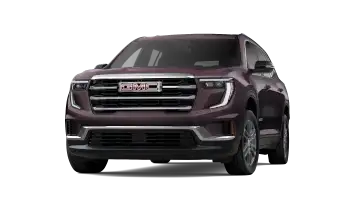
GMC Acadia Review: A Complete Look at GMC’s Midsize 3-Row SUV
The GMC Acadia has earned its place as one of the most capable and well-appointed three-row midsize SUVs on the market. Fully redesigned for 2024, the current Acadia is a fundamentally different vehicle than the one that preceded it: larger, more powerful, more technologically sophisticated, and equipped with a third row that can actually accommodate adults. If you are shopping for a three-row SUV in the $43,800 to $63,100 range, the Acadia deserves a serious look. This review covers everything from the powertrain and towing numbers to the interior quality, safety technology, and how it stacks up against the Honda Pilot, Toyota Grand Highlander, and Mazda CX-90.
What the Current-Generation GMC Acadia Gets Right
The 2024 redesign transformed the Acadia from a crossover-sized vehicle into a true full-family SUV. Where the previous generation was criticized for its cramped third row and modest towing capability, the current model addressed both directly. The wheelbase grew significantly, the roofline is more upright, and the overall proportions now sit closer to the Yukon than to the compact crossovers in GMC’s lineup.
The most meaningful upgrade from the prior generation is not any single specification but the overall sense that the vehicle was built to a higher standard. Interior materials at the Denali level compete with European luxury brands. The safety suite, now called GMC Pro Safety, is standard on every trim, not a paid add-on. And the 15-inch portrait touchscreen with Google Built-In replaces the smaller, slower interface of the outgoing model with something that feels genuinely current.
For Florida families in particular, the Acadia’s combination of cargo capacity, passenger room, and available Super Cruise on the Denali Ultimate makes it a compelling option for the regular highway driving that Florida geography demands. The I-4, the Florida Turnpike, and US-1 between Titusville and Orlando represent exactly the kind of compatible road miles where Super Cruise is most useful.
Under the Hood: 2.5L Turbo Engine, Towing, and MPG
The 2026 GMC Acadia is powered by a 2.5-liter turbocharged inline-four cylinder engine producing 328 horsepower and 326 lb-ft of torque, paired with an eight-speed automatic transmission. This engine replaced the naturally aspirated V6 of the prior generation, and the result is meaningfully more torque at lower RPMs, which translates to better real-world performance when merging onto highways, passing at speed, or hauling a full load of passengers and cargo.
All four Acadia trims tow up to 5,000 pounds, and GMC includes the Trailering Package as standard equipment rather than charging for it. That is sufficient for a mid-size boat, a utility trailer, a small camper, or a loaded enclosed cargo trailer. Buyers who regularly tow heavier loads should look at the GMC Yukon with its standard V8, but for the typical Florida recreational tower hauling a 17-foot center console or a personal watercraft trailer, 5,000 pounds covers most scenarios.
Fuel economy varies by drivetrain, with front-wheel-drive models rated higher than all-wheel drive. GMC does not publish EPA figures on its Acadia model page, and third-party sources differ, so check the window sticker on the specific vehicle you are considering rather than relying on a general figure. In real Florida driving conditions, Acadia owners can expect figures close to the EPA estimates on sustained highway runs, with city figures varying more based on traffic patterns around the Space Coast.
Front-wheel drive is standard on the Elevation trim. AWD is standard on the AT4, Denali, and Denali Ultimate, which aligns the powertrain options logically with the trim levels most likely to be used in varying road conditions.
Acadia Interior, Technology, and Third-Row Comfort
The Acadia’s interior is one of its strongest selling points, particularly at the Denali level. The standard 15-inch portrait-oriented infotainment touchscreen uses Google Built-In, which means native Google Maps, Google Play integration, and Google Assistant voice control are built into the system rather than routed through your phone. This provides a more responsive and seamlessly integrated navigation and connectivity experience than the previous generation’s phone-mirroring-only approach.
The 11-inch digital driver information center provides a full configurable view of vehicle data, navigation, and driver assistance status without requiring the driver to look away from the forward road plane. Wireless Apple CarPlay and Android Auto are standard, and the system supports multiple device connections simultaneously.
The third row in the current Acadia is a meaningful upgrade from the previous generation. With 97.5 cubic feet of maximum cargo volume with all seats folded, and adult-usable headroom and legroom in the third position, the Acadia finally competes with the Toyota Grand Highlander and Honda Pilot in third-row habitability. One configuration detail that matters for larger families: the Elevation seats up to eight, while the AT4, Denali and Denali Ultimate seat seven. If the eighth seat is a requirement, the Elevation is the only trim that offers it. For families where the third row sees regular adult use rather than occasional child use, this distinction matters.
Available features at upper trims include heated and ventilated front and second-row seats, a panoramic sunroof, rear seat media, and open-pore wood trim on the Denali that elevates the interior aesthetic to a level more consistent with luxury brands than mainstream three-row SUVs. The Denali Ultimate adds a performance-oriented Bose audio system and the full digital cluster experience.
Acadia Trim Levels: Elevation, AT4, Denali, and Denali Ultimate
The 2026 Acadia is offered in four trim levels, each targeting a distinct buyer profile.
The Elevation is the entry point, starting at approximately $43,800 with front-wheel drive. It delivers the full 15-inch touchscreen, Google Built-In, GMC Pro Safety, and the 328-horsepower engine in a clean monochromatic exterior package. FWD is standard with AWD available. For buyers who want a capable, well-connected three-row SUV without the premium pricing of the upper trims, the Elevation represents the best value in the lineup.
The AT4 starts at approximately $52,500 and adds all-wheel drive as standard, all-terrain tires, and increased ground clearance over the Elevation. The AT4 is designed for buyers who want more capability on unpaved surfaces or in adverse conditions without the full luxury positioning of the Denali. Dark exterior elements and the AT4 badging give it a distinct visual identity within the Acadia lineup.
The Denali brings the premium interior appointments: leather-appointed first- and second-row seats, a configurable 8-inch head-up display, 20-inch machined aluminum wheels with a Pearl Nickel finish, and third-row power-folding seats, and additional content over the AT4 at a starting price in the upper $55,900 range. The Denali is where the Acadia begins competing with the Audi Q7 and Lincoln Aviator on interior quality rather than just specification matching.
The Denali Ultimate is the flagship, starting at approximately $63,100 with front-wheel drive. It adds standard Super Cruise with a three-year OnStar plan included, the 11-inch driver cluster, HD Surround Vision with nine camera views, a 16-speaker Bose Performance Series audio system, and the full suite of premium content that makes the Acadia Denali Ultimate a genuine luxury vehicle by any reasonable standard. For buyers who want hands-free highway driving as a standard rather than optional feature, the Denali Ultimate is the only trim in the Acadia lineup that delivers it as base equipment.
Safety and Driver Assistance Features
GMC lists 19 safety and driver assistance features as standard on every Acadia trim, not six. Beyond the expected Enhanced Automatic Emergency Braking, Forward Collision Alert, Lane Keep Assist with Lane Departure Warning, Front Pedestrian and Bicyclist Braking, Following Distance Indicator and IntelliBeam, the standard list also includes HD Surround Vision, Blind Zone Steering Assist, Rear Cross Traffic Braking, Rear Park Assist, Reverse Automatic Braking, Adaptive Cruise Control, Rear Pedestrian Alert, Side Bicyclist Alert, Intersection Automatic Emergency Braking, Safety Alert Seat, Traffic Sign Recognition, Rear Camera Mirror and Teen Driver.
The Denali Ultimate adds Enhanced Automatic Parking Assist and Driver Attention Assist. The real-world value of the parking and cross-traffic features is particularly high in Florida’s busy lots, boat ramp environments and the stop-and-go corridors around major shopping destinations, and they are included rather than optional.
Super Cruise, GMC’s hands-free driver assistance technology, is standard with a three-year OnStar One plan on both the Denali and the Denali Ultimate, and available on the Elevation and AT4. That makes the Acadia one of the few three-row SUVs where hands-free highway driving can be had at any trim level. The system uses precision GPS mapping, a driver attention camera, and radar and camera inputs to enable hands-free driving on over 600,000 miles of compatible roads, including the major Florida interstates and the Florida Turnpike. For buyers who commute regularly between Titusville, Orlando, and surrounding areas, Super Cruise is the driver assistance technology with the highest day-to-day impact.
Acadia vs the Competition: Honda Pilot, Toyota Grand Highlander, Mazda CX-90
The three-row midsize SUV segment is competitive, and the Acadia has distinct advantages and disadvantages relative to its primary competitors.
Against the Honda Pilot, the Acadia wins on interior materials at equivalent price points and technology content, specifically Super Cruise on the Denali Ultimate. Both vehicles share an identical 5,000-pound maximum towing capacity on AWD trims, so towing does not differentiate them. The Pilot wins on predicted reliability history, simpler ownership, and the Honda brand’s track record for long-term durability. If resale value simplicity and a proven reliability record are your primary decision factors, the Pilot is a legitimate choice. If you want a premium interior and hands-free highway driving, the Acadia is the stronger option.
Against the Toyota Grand Highlander, the competition is closer. The Grand Highlander offers a hybrid powertrain option that delivers significantly better fuel economy, a genuine advantage for high-mileage Florida drivers. The Acadia counters with Super Cruise, a more premium interior at comparable pricing, and the GMC brand’s ownership experience within the Starling network. If you are open to a hybrid and fuel economy is a priority, the Grand Highlander deserves a test drive alongside the Acadia.
Against the Mazda CX-90, the Acadia wins on third-row practicality. The CX-90 delivers Mazda’s premium aesthetic and driving feel but with a smaller third row and a lower maximum towing rating. The CX-90 is a better vehicle for buyers who prioritize the driving experience; the Acadia is a better vehicle for buyers who prioritize passenger and cargo utility.
Is the GMC Acadia the Right 3-Row SUV for You?
The Acadia is the best fit for growing families who use all three rows, buyers who want Super Cruise for regular Florida highway driving, and anyone who is cross-shopping the Yukon but finds it larger than their situation requires. The Acadia delivers most of what makes the Yukon compelling, at a lower price point and in a package that is more practical for everyday urban and suburban use.
Skip the Acadia if you need a hybrid powertrain, if you tow more than 5,000 pounds regularly, or if you are specifically looking for a V6. The current Acadia’s four-cylinder turbo covers most real-world needs, but buyers with specific V6 preferences or hybrid requirements should look at the Grand Highlander or Pilot instead.
See the GMC Acadia at Starling GMC Titusville
We have current Acadia inventory across multiple trims at Starling GMC Titusville, including the AT4 and Denali configurations that represent the most popular choices among Brevard County buyers. Our team can walk you through a side-by-side trim comparison, arrange a test drive, and answer any specific questions about how the Acadia’s features apply to your particular use case.
We serve buyers from throughout Brevard County, Titusville, Cocoa, Rockledge, Merritt Island, and the surrounding Space Coast region. Stop in, browse our inventory online, or call our sales team to get started.
Conclusion
The current-generation GMC Acadia is the most capable, most sophisticated, and most competitive version of this vehicle in its history. The 2024 redesign addressed the previous model’s most significant shortcomings: the third row is now genuinely usable, the engine delivers 328 horsepower and 5,000 pounds of towing, the interior quality at the Denali level competes with vehicles priced significantly higher, and Super Cruise brings hands-free highway driving to a three-row SUV segment where most competitors still don’t offer it. For Florida families who need three rows, want a capable tow vehicle, and drive the state’s interstates regularly, the Acadia makes a compelling case.
Frequently Asked Questions
What is the towing capacity of the 2026 GMC Acadia?
All four 2026 Acadia trims tow up to 5,000 pounds. GMC includes the Trailering Package as standard equipment rather than as an option, so the rating applies across Elevation, AT4, Denali and Denali Ultimate. That covers most mid-size boats, utility trailers, small campers and enclosed cargo trailers.
Does the GMC Acadia have a third row for adults?
Yes. The current generation, redesigned for 2024, has a significantly larger third row than the model it replaced, with adult-usable headroom and legroom. Cargo volume is 23.0 cubic feet behind the third row with all seats up, and 97.5 cubic feet behind the first row with the second and third rows folded. The Elevation seats up to eight; the AT4, Denali and Denali Ultimate seat seven.
Is Super Cruise available on the 2026 GMC Acadia?
Yes, on every trim. Super Cruise hands-free driver assistance is standard with a three-year OnStar One plan on the Denali Ultimate, and available as an option on the Elevation, AT4 and Denali. GMC describes the compatible road network as a growing one; for the 2027 model year it publishes a figure of more than 600,000 miles of compatible roads, which includes the major Florida interstates and the Turnpike.
What are the Acadia’s engine options for 2026?
One engine across the range: a 2.5-litre turbocharged four-cylinder producing 328 horsepower and 326 lb-ft of torque, paired with an eight-speed automatic. Front-wheel drive is standard on the Elevation, Denali and Denali Ultimate with all-wheel drive available; the AT4 comes with all-wheel drive as standard. There is no V6 and no hybrid.
How many standard safety features does the 2026 GMC Acadia have?
GMC lists over 19 safety and driver assistance features as standard on every trim, not as an upper-trim package. The standard list includes Enhanced Automatic Emergency Braking, Forward Collision Alert, Front Pedestrian and Bicyclist Braking, Lane Keep Assist with Lane Departure Warning, Blind Zone Steering Assist, HD Surround Vision, Rear Cross Traffic Braking, Rear Park Assist, Reverse Automatic Braking, Adaptive Cruise Control, Intersection Automatic Emergency Braking, Rear Pedestrian Alert, Side Bicyclist Alert, Following Distance Indicator, IntelliBeam, Safety Alert Seat, Traffic Sign Recognition, Rear Camera Mirror, Teen Driver and Buckle to Drive.

0 comment(s) so far on GMC Acadia Review: A Complete Look at GMC’s Midsize 3-Row SUV